Billy Pierce
Billy Pierce
Bolinas Community Public Utilities District, California
“It's a health job; your job is to keep people healthy. Keep their water clean. Keep their wastewater going where it's supposed to go...The goal is public health. That's what the job is -- it's a public health job..”
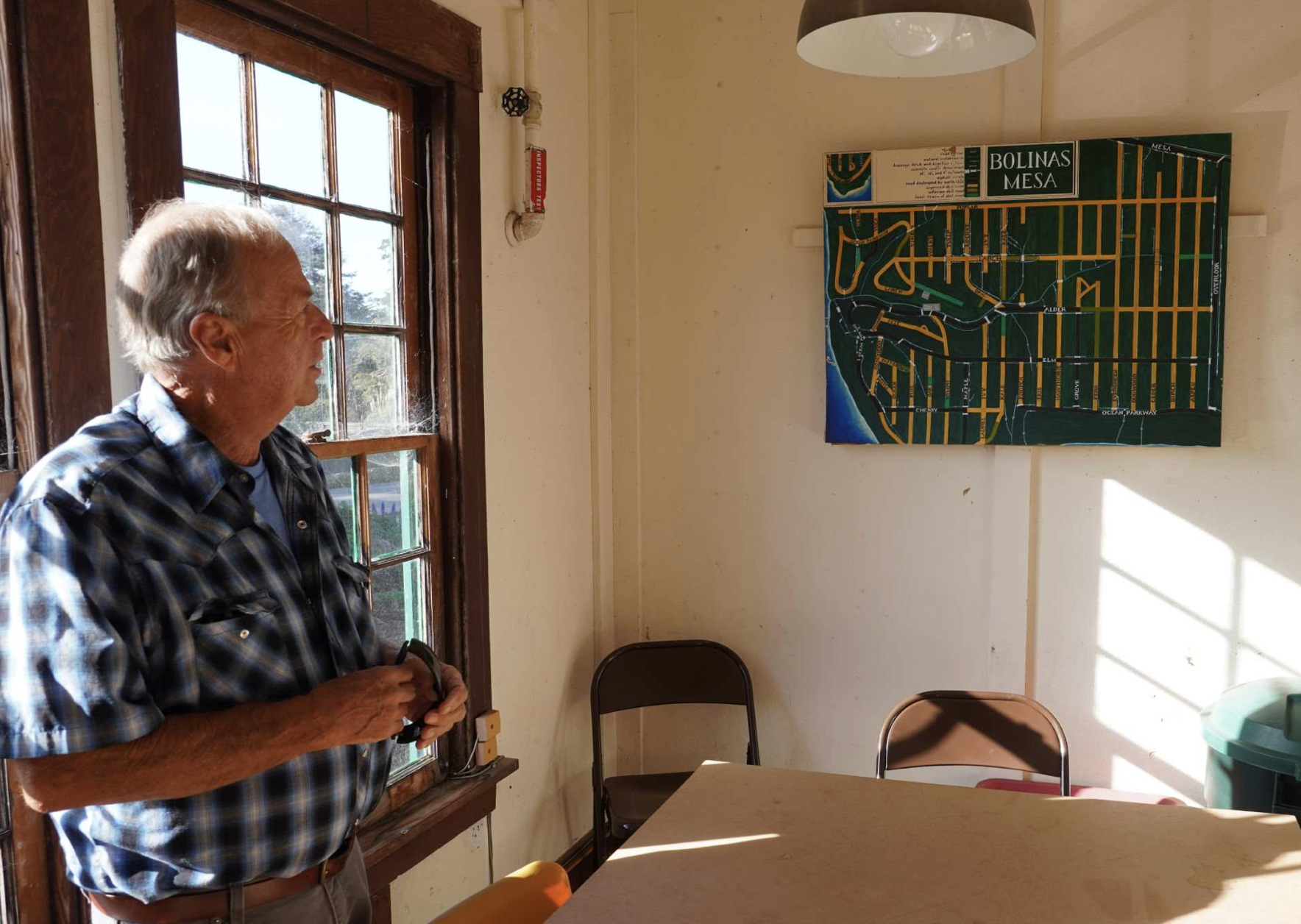
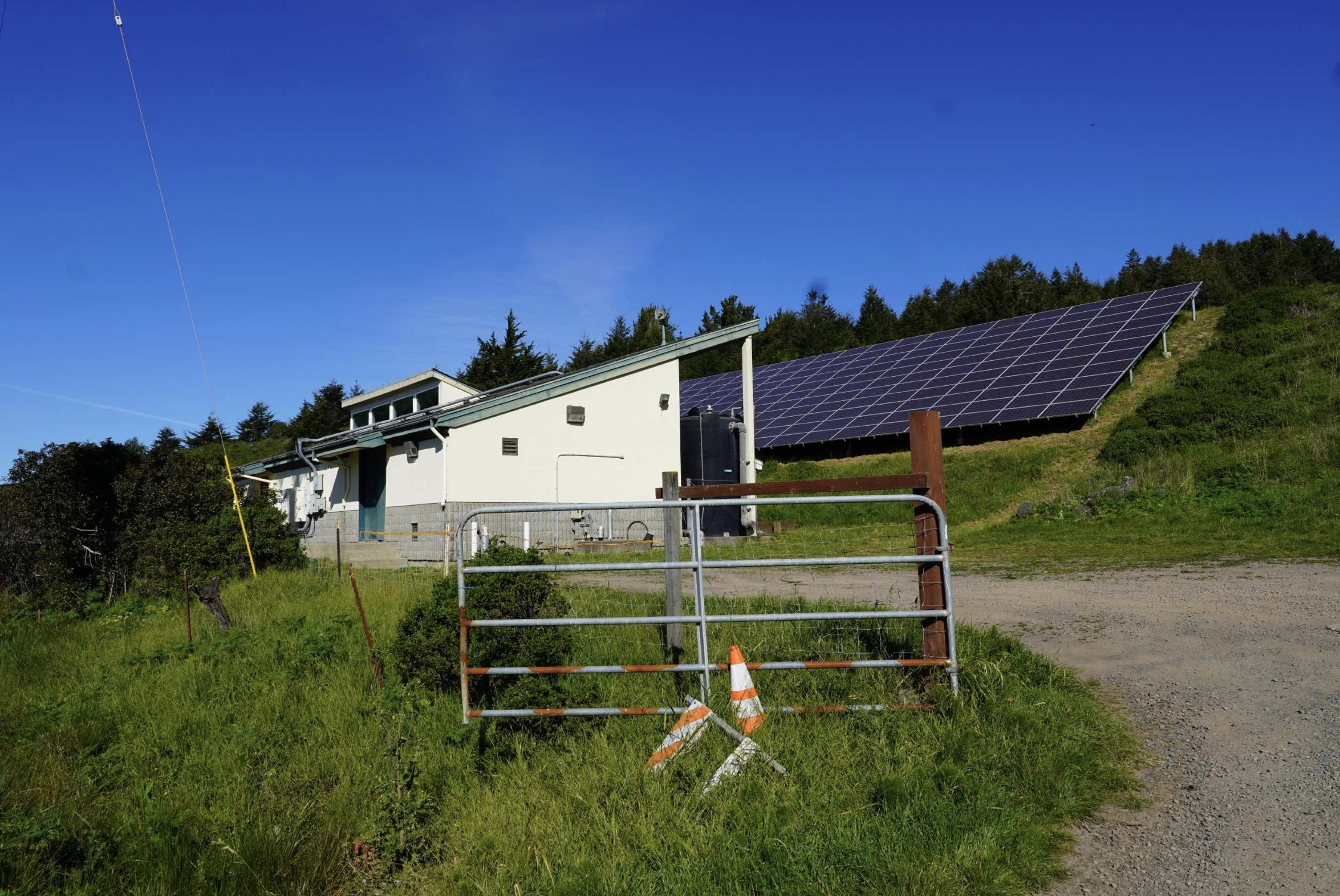
Billy Pierce spent 37 years caring for the water and wastewater systems that sustain Bolinas, California, though he never set out to become a water operator. After arriving in Bolinas in the 1970s, he worked a variety of jobs, including running a small landscaping business while raising his son as a single parent. The turning point came unexpectedly one afternoon when he watched a group of children, including his own, jumping off a barn roof wearing Superman capes. Realizing he needed health insurance and more stability, he asked the local utility district if there was an opportunity for full-time work. The answer was yes, and what began as a practical decision became a career that would shape much of his adult life. By the time he retired, Pierce had served as Chief Water Operator and Wastewater Operator, helping oversee every aspect of the small community's water and wastewater systems.
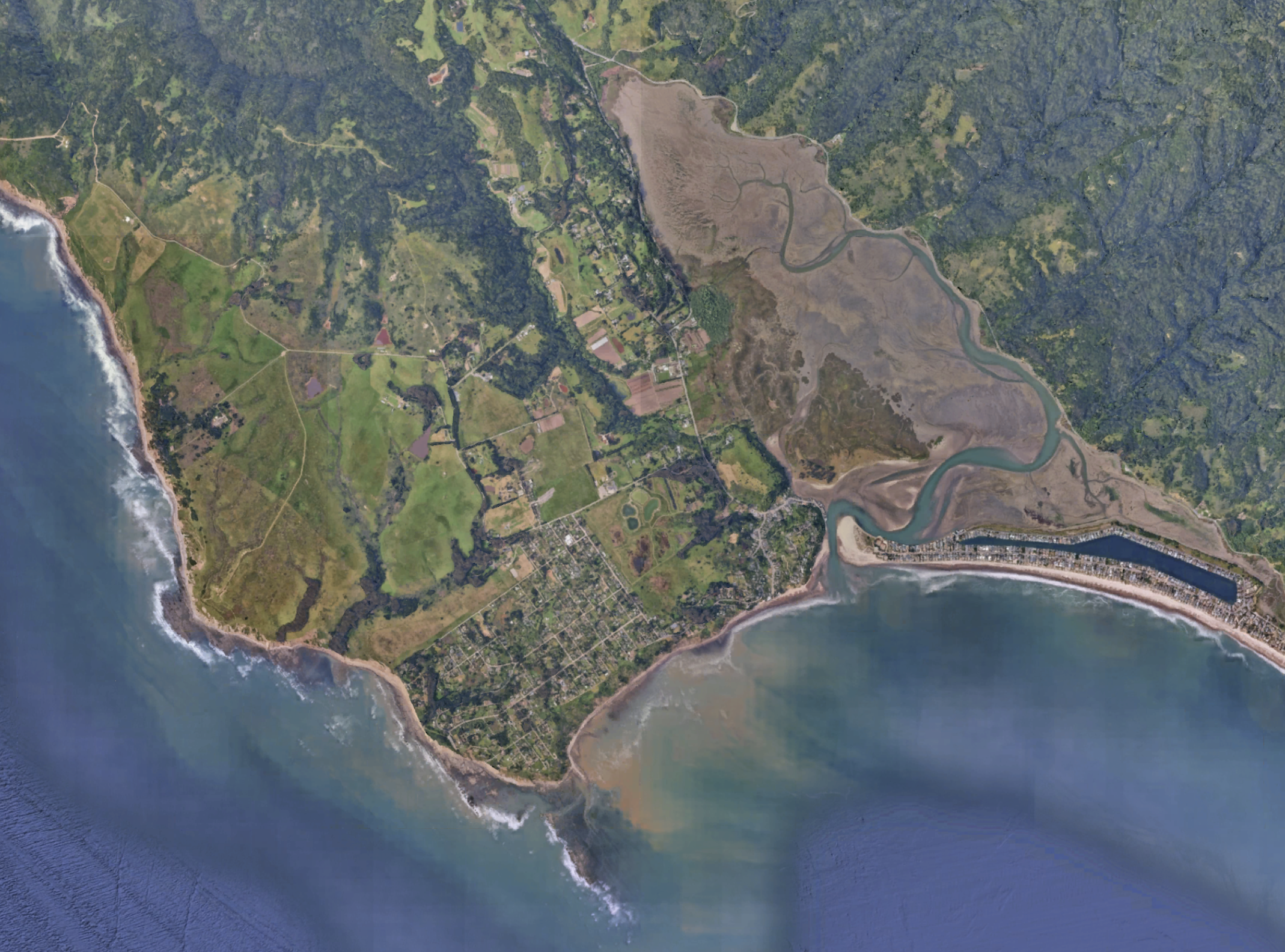
Bolinas is a place where water is both scarce and central to community identity. Isolated between the Pacific Ocean, protected parklands, and the San Andreas Fault, the town relies on a small creek for its water supply. Development has been limited for decades by a water moratorium, and residents are acutely aware that the community's future depends on living within the limits of its watershed. Pierce spent his career navigating those constraints while maintaining aging infrastructure, responding to emergencies, and helping residents understand the realities of a finite water supply. In a town of roughly 1,200 people, he saw education and community participation as essential parts of the job, noting that residents often became the district's eyes and ears, reporting leaks and keeping watch over the watershed they all depend upon.
Over nearly four decades, Pierce witnessed major technological changes, droughts, storms, and infrastructure failures, yet he remained grounded in a simple understanding of the work. For him, the job was ultimately about public health: keeping drinking water safe, wastewater contained, and communities functioning. He mentored younger operators, embraced new technologies when they arrived, and helped guide the district through challenges large and small. Looking back, he describes the work not as heroic but as necessary—a responsibility that will always require people willing to pay attention, solve problems, and care for the places they call home.
Date: March 16, 2026
Interviewer: Erin Elder
Interview
Running a unique system in coastal CA
BP: The water system's very old. I think the last major pipe system that was done was in the ‘80s. There's been a couplesmall ones after that where, some old infrastructure was replaced in the early 2000s and then ‘60s and ‘80s. We still have pipe in the ground that was put in the ‘40s and ‘50s, that is leftover pipe from when they used to build ships in the East Bay. They used a steam pipe -- that's about a 1.9 inch OD pipe -- which is not comparable to fittings that are made nowadays and that was put in the ground. There are probably 7 miles of that still on the ground. It's leftover pipe from the ships that they gave away and water districts all around the Bay Area went and grabbed free pipe. That was put in the ground, and there's still a bunch of that in the ground, which is very problematic. Being a small water district, coming up with money to do big projects is hard. The district has been very good, in the past, at being able to secure funding to do projects. I believe the district has now paid their debt off, so I don't know what they're going to do now. It’s a hard time to do new projects. Everything has gotten so expensive, it's almost impossible. Fittings that used to cost $200 now cost $1800. It's crazy. It's a real bind.
EE: What can you say about this location and the context, the terrain or geology? What makes water unique here? I imagine it has its own challenges.
BP: Water is scarce here. In the ‘70s, a group sued the water district because they couldn't get water meters. And I am loosely phrasing how this went; I may be incorrect. It was a legal issue that was in court for, I don't know, 15, 18, 20 years. The argument was that the district's responsibility -- this is how I understood it --the district’s responsibility was to provide water. The district's argument was “we can't provide something we don't have.” So, the district put in a moratorium on building because of the water shortage. This group sued the district that that was incorrect. After many years of litigation, the ruling was in favor of the district. So as a result of that, the district has a limited water supply, hasn't issued new water meters since the ‘70s. I may be incorrect, they may have issued one, I'm not sure. Usually, it's a transfer of a water meter for any building.
Our water supply comes from the Arroyo Hondo Creek which is inside the national park, so that has its restrictions, being inside the park. We have to abide by park rules and regulations, so development at the water site is monitored heavily and we really can't develop there. The reservoir itself --when you use the term reservoir, you may think of Hetch Hetchy, or around here in Novato, Safford Lake -- our reservoir is about 20 feet wide and 30 feet long and 3 feet deep. And it's a dam on the Arroyo Hondo Creek, which through some magic of earthquake movement and geology is supplied by a spring, and it runs all the time. When we get high, hot, dry weather, and we're in these periods of drought, it slows down considerably, but fortunately, it keeps running and we still have water. As a result, we've had several emergencies over the time I worked here where we've put in extremely rigid water restrictions. Our last water restriction that we put in was kind of unique. What we put in is a per household usage. I believe the last was 150 gallons per home-- not per person. So, if a home had 6 people, it's 150 gallons. If it was 2 people, it's 150 gallons. And when that goes into effect, we pretty much spend most of our time monitoring water usage. That being said, when we went into that, last water drought, we found that about 85% to 90% of the community already met that requirement. It's a very water-conscious community. As homes are changing ownership, it's not a reality to the new homeowners until we get into a drought. We always recommend that people go look at the water source. We do have two backup reservoirs. Those backup reservoirs, I look at them like your bank account. The Arroyo Hondo, our main water source, is your checking account. Every day it gets replenished and then you draw out of it. During a drought, we overdraw our account but we have a savings account, and the savings account are the two reservoirs. They're not enough for long term supply. They're in the national park, so what they are is what they are. We draw from those and there's water quality issues with those which we deal with.
EE: Like what?
BP: Oh, there's algae growth, there's high manganese, all of it just plays into water treatment issues that we don't have out of the Arroyo Hondo Creek. So, there's different steps that were taken to be able to deal with that. And then we have an azolla, which is a plant growth on top of the reservoir which is just impossible to get rid of. It makes great animal feed and fertilizer -- very high in nitrogen. So that is taken off, from what I understand now, twice a year, they harvest it off the top of the reservoir. When it grows on the reservoir, it blocks the sunlight, stops photosynthesis in the reservoir, and creates striation in the water. It causes the reservoir to roll over; the water on the bottom comes up to the top and you just end up with just the most horrendous water quality. It's not good. It's those little things that you have to deal with.
If you are a large water district, you have a whole army of people, you have your own laboratories, and you have your own crews that deal with this stuff on a regular basis. You have an engineering staff and all that. When you're a small district, you don't have any of that. You have to subcontract that out and you have to find people that know how to work with a small district. We've been fortunate doing that. Our water quality is really good. When we have to go on to the reservoirs, it becomes more of a challenge and then the amount of water becomes the biggest challenge.
Building new water and wastewater system
BP: We had conventional water treatment -- sand and gravel filters -- for years. They weren't able to meet our water quality results for the state so we were in violation. For 15 years, the district tried all sorts of methods to fix the problem. We were very fortunate at that point in time; the state of California was very understanding with the problems of small districts and instead of fining us, they allowed us to take that money -- maybe it was their policy, I'm not quite sure, but from where I was sitting, it was a blessing -- they let us reinvest that money into trying to solve the problem. Then a company came out of Australia called MEM Corps. They came up with these microfiltration units, which are very much like a kidney dialysis unit, but, you know, theory is the same, but the filtration is different, same, but different. That was able to pull all particulates up to one micron out of the water, which is huge. We went and looked at it; we brought it to the board. We've always had a great board of directors here at the district. They're all local community members; they were elected. They receive just a little money for what they do, and they're great. They've always been great. They'vebeen community based. They've been very fair to employees. It's been a great place to work because the board always takes the community's interest and the employees' interest and treat it the same. That being said, they went off the deep end of the pool and went for this new technology which was a major investment -- a couple million-dollar investment-- and we put in a micro-filtration plant. It was only the third one in the state of California.
EE: Oh, wow. And you had a hand in doing that?
BP: We were all involved in it. They built the plant and it's been in operation ever since. It's had changes done to it, tweaks here and there, and it really made the job a lot easier. The technology was completely different. The biggest learning curve was getting over the fact that it was different. One day we were using something we were very comfortable with, and the next day, there was this automated technological thing, which I am not very versed in -- that's not my world, but it's still the same thing -- the water comes in; it goes through different valves and different processes through a filter and comes out the other end.
EE: Did you have to seek extra training or how did you learn?
BP: You get trained when they bring it in, and we were very fortunate to have a technician who started the plant up, and then he opened his own business and we worked very closely with him every time he'd come out two or three times a year. He would come out and we'd have staff training. When he came out, he was always available when we had initial problems we couldn't deal with because we didn't know what was going on. Now it's a completely different animal. My generation is no longer running it. The younger generation -- Stu, Andrew, Evan and Sean -- they're all in their 30s, and it's not foreign to them. Their new ideas are great. The plant's even better off with the new generation of operators. So that's all worked out really well.
The original wastewater in Bolinas was just, and still is, the downtown -- somewhere in the neighborhood of 150 hookups or so. A gravity system, it all flowed downtown to a giant manhole which had a pipe that went out into the channel, into the lagoon. That was the wastewater system in Bolinas from the early 1900s. Then the Clean Water Act passed and when the Clean Water Act was put in, one of the goals was to stop that. It was going on all over the country -- open ocean or river dumping of raw sewage. So, there was a plan put together that would build a 20 million gallon-a-day sewage treatment plant here in Bolinas. It called for the development of the Bolinas Lagoon -- to put in hotels and marinas, to have Stinson Beach developed to a population of over 100,000 people here in Stinson and Bolinas. It would be much like Santa Cruz. That brought up a giant uproar, of course. That was a battle, which was part of the water battle...
EE: That was in the early ‘70s?
BP: That was in the ‘70s and that prevailed. As a result, that plan was shelved and never went into effect but the federal government had already funded the sewer treatment plant. So, the board of directors at the time were a bunch of great people. They somehow connected up with Dr. Oswald--I believe he was at UC Berkeley --and he had his own idea on a sewage treatment plant which was a very passive pond system and was put into Bolinas. I can't believe the federal government funded this because it was from left field, but we still use it. It works great. It's operator friendly and it requires no chemicals. It services the existing downtown sewage area, the area that was ocean outfall. All of that now goes to that same area where it went before, but now there is a lift station, a sewage pump station, and it's pumped up to spray fields and the ponds, which is across from the firehouse. You would never know what it is; it looks like a field with ponds and full of birds. It's a great thing, and that was the first one put in the state. Now there's several. It's a great way to treat sewage. It requires a lot of land-- that's why it's not used widely. So that was the sewage treatment. Being able to do water and sewer here --a small crew can handle it because the wastewater disposal system is so simple. It is very simple.
Community awareness and involvement
BP: The community's very aware of their limited water supply. Bolinas is changing in the demographics. Real estate values like most of California are crazy. They're even crazier here, since it’s a coastal community with restriction, no new building so, homes have a vacation value. They have a value that's crazy, just ridiculous. Nine hundred square foot homes that need a lot of work sell for two million dollars, it's absurd. My opinion, again.
As that group of people move in, they have different expectations, then they learn the reality of the water supply. It hasn’t been a battle; it requires educating people. It's not confrontational. Some people get upset, but then they get it. So, the community's aware of the limited water. As part of inspections over the years, when I was asked by our regulators, “how do you monitor for leaks? How often do you go up to your water source and monitor for leaks in your collection system and how do you look for leaks in your distribution system?” The answer has always been -- and was totally accepted by them -- is that the community does it. We have a group of people that hike up the Arroyo Hondo Creek every day, different groups of people. There are people that go up and study the plants, birds, artists go up and draw, and they always call us when there's an issue. In this community, people are out and about walking a lot. They walk their dogs; they ride their mountain bikes, they're out and about. And when we promote this, “if you see something, let us know.” And we'll get calls. “There's a wet spot on the road on Tulip.” We'll go look at it and see what it is and if it's not a major leak, it's a small leak, we’ll put a barricade on it or something and finish what we're doing and come back to it. In the interim, we'll get 3 or 4 more calls that there's a wet spot on Tulip --that's the involvement of the community. Everyone's looking if they see something. They know that water is precious here.
As a district, we are not connected to any other water source or water district. Stinson Beach is three hundred feet across the channel. We are not connected to Stinson Beach’s water system. We are not connected to Inverness. North Bay Water serves part of Inverness; we’re not connected to them. We are surrounded by National Park and there is no pipeline going through the park. What we have is all we have. We are not connected to anything else. When people become aware of that, of course, there's always the questions, “Why don't you put in a pipeline? Why don't we connect to Stinson?” and that's dealt with. They become aware of the fact that we don't have a lot of water. I've taken people up the Arroyo Hondo who want to go see the water source and I never tell them where it is. We just walk and talk and groups break off and we just walk up and I always try to be at the end of the group. I've never had a group of people stop at the reservoir and say, “this is the reservoir.” They walk right past it. I call them back and I say, “this is it” and they are shocked. It's that small.
EE: It sounds like education is part of what you bring to the job.
BP: It's not that you bring it to the job; it's part of the job. People have to understand and they get it.
EE: It sounds like you want them to understand the preciousness of it. Are there other aspects that you want people to know about the water and the water system?
BP: They don't get that the water's precious from what we tell them. They get that the water's precious when we’re in a drought and there's no water.
EE: They experience it...
BP: They experience it. People don't really believe what you say, especially if you're working for the “government”. You know what I mean? So, they just get it or they don't.
Isolation and self-sufficiency
BP: We don't have a lot of modern amenities here. We don't have a gas station, we have a small grocery store, which is a wonderful little store. We have two restaurants now. A museum. We have a bar that has a few hotel rooms in it. A liquor store, which closes at seven, the grocery store closes at seven. The restaurants close at seven/eight o'clock. If the bar doesn't have any business, it closes. Not a lot of streetlights. Downtown rolls up at eight o'clock. So if you want Grubhub, or if you get a hankering for an ice cream or a burger at ten o'clock at night, you don't live here. It just creates… that's the community that is here. It's just not the same as other places. Stinson's the same way -- very small store, everything closes up early. Inverness -- same thing in Inverness. Same thing in Point Reyes, which is a bigger town. But West Marin is different than Marin. It's isolated. The isolation brings its own problems with water and wastewater. You have to be aware of what your weaknesses are and have the materials on hand to repair them. You can't get in the truck and be gone for an hour and have your parts. It's two hours to get parts and two hours back. And now with supply chain issues, you're lucky if the parts are even there. You have to be aware of that and be prepared for what goes on.
EE: I know you said that these coastal communities are not connected physically, but would you say that you can rely on each other for help or information? Or are you also kind of self-sufficient in that way?
BP: I say it was self-sufficient up till the mid ‘90s. Self-sufficient in the sense that we rarely ever even talked to each other. But that's changed, regulations have changed. People have problems, we find we have some similar problems and we have some totally different problems. Inverness put in the exact same water filtration system we did around the same time, a little after us. Water in Inverness is completely different, from a chemistry makeup, than the water in Bolinas. And the water in Stinson Beach is completely different, and we're only separated by a few miles. Inverness and Bolinas are different from the rest of the state of California. Stinson and parts of Point Reyes are on the North America plate. Bolinas and Stinson, we're on the Pacific Plate, so from my backyard, when I look at Mount Tam, I'm looking at North America. I'm on the Pacific Plate; I live in Bolinas. We are separated by Highway One, and the Bolinas Lagoon is pretty much the San Andreas fault. As a result of that, our geological makeup here is a mess because it's been ground and moved. I've been told that, at some point, Bolinas was off of Santa Cruz. So, we're moving north. Stinson Beach is staying still and we're moving north. That makes a difference in water geology, the chemistry of the water, because our geological makeup is a real mishmash.
EE: Wow. So you were saying that since the ‘90s, there's been more conversation, or you help each other out?
BP: Yeah, we do. Inverness put in the same treatment facility as we did so our parts were interchangeable. Our information became more pertinent because we had the same problems. I'd have a problem and Jim didn't have a problem. I called Jim and he'd say, “oh, we did that and this is how we fixed it.” He’d come down here; we'd go up there. Stinson Beach, their system is newer. They have fewer problems within their distribution system, and their water sources are different, so they have different treatment issues. Our conversations went back and forth -- “we have a broken pipe,” and “I don't have this fitting; do you?” I always need six of these as backup, always. There’s way too many fittings and parts. When I started, I inherited a whole bunch of fittings and parts that were already here. So, they need a part, we'dget them a part. We need something, they’d give it to us. And we always trade. There's no billing or anything. It's just like Buck would need a fitting; I'd send Donny over. Donny would put the fittings in the truck, and they would go back and fix what they had. If we need something, they'd do the same. We do the same trade, same with Inverness. Back and forth.
Splicing pipes
EE: Can you tell a story or two -- I'm sure you have many -- about a problem that you worked hard to fix?
BP: I don't know if you work hard to fix a problem. I think you just fix the problem. You know,
EE: What’s the difference?
BP: A problem you can't solve, you have to work hard at. I think that my experience has been here. Everybody that'sworked here is -- this wasn't their goal job. They've done many other things beforehand. I did many things before I started working here. When we're hiring people, they've never done this before. Very rarely have we hired somebody who had a treatment operator's license or any license at all. They've done tree work, worked as an apprentice for plumbers, they're carpenters, truck drivers, equipment operators, gardeners, landscapers, that kind of stuff -- blue collar work.
EE: Hands on.
BP: Hands on. So when a problem comes up, something that needs to be fixed, they already know how to fix it. They don't know -- I didn't know how to fix it -- but when I looked at it, I go, “if you do this and you do that, you can fix it.” That pipe I was talking about, the steam pipe, the 1.9 diameter pipe. An inch and a half pipe fitting is too small. A two-inch pipe fitting is too big. In order to fix a broken piece of pipe, you have to splice in another pipe. To do that, you would take two fittings. One would go over the old pipe and put the new piece of pipe in it and the same at the other end. So how do you do that when the fittings don't work? Well, Mike Aitkens had a shop downtown -- he's an auto restorer in a little machine shop -- we would take an inch and a half dresser coupling down to Mike and he’d put it on his metal lathe and take the metal flange and bore it out to the right diameter. Then we would be able to put that on a piece of inch and a half schedule 80 pipe . He'd be able to splice it in, so there's…
EE: So, each one was custom made.
BP: You have to take an existing fitting and adapt it to work. That happens in the field all the time with everything.
EE: The custom fix.
BP: The custom fix. I see it all the time.
The future of the water system
BP: A lot has changed, but it’s still the same. Water comes through the pipes and goes out your faucet. The job will always be here. It will always take people to make it work. You can automate a water treatment plant; you can have a truck that drives itself. But someone still has to get in the hole and fix the pipe. Somebody still has to oversee the operation of the automated plant. Looking for anomalies. With our water filter system, they are automated -- they backwash; they filter water; it's all automated. The operator has to monitor the functions; you have to know how it all works. And you have to be looking at things like air leaks and you have to look at valves that are leaking. Little things that are telling you there's a problem coming. If you're not monitoring that, you go from everything running to nothing working at all because you weren't paying attention, or you didn't have somebody watching the automated plant operate and monitoring the things that the automation isn't looking at. There's always going to be a need for water, and there's always going to be a need to dispose of your waste.
The future of the water system
BP: To go back to things that have happened, incidents in town -- back in the ‘80s, early ‘90s-- we have two water storage tanks. They both needed maintenance and repair. So, we took one of our tanks out of operation. We were just relying on one tank, which was enough to provide water for the town for a while; for several days. That tank was being worked onand we had a series of really big storms hit and as a result of that, our water quality was poor coming into the plant. We were restricted on water treatment, so the surge level in the tanks had dropped considerably. Then we had a big overnight storm hit and we had an unfortunate series of coincidences that led to a total disaster. The power was knocked out. The standby generator did not start. We weren't producing water. The water storage tanks were at about 50%. When I came in the morning, the water storage was at a hundred thousand gallons, which is not a good sign. I could see the water gauge dropping, so overnight we had a pipe break in town which was draining the system. The pipe broke, one tank's out of service, the other tank's almost empty, the generator didn't start. We weren't producing water, and we were restricted on the amount of water we could produce. The result of that was a decision we made -- we had to shut the system off. Turning a water system off is not a good thing. The water system basically drained, the whole distribution system. People didn't have water, so we were in a total state of emergency. We notified the state. We put in a boiled water notice. We have a disaster council for emergencies, they came in and they were activated. All the community leaders came in and we had to restart the system. We had to shut valves in the system going backwards. That's not correct -- we went to our first set of valves that are after the water storage tank. We shut that, we got the filter plant working and started putting water back in the tank. We isolated the whole system because we didn't have a clue where the leak was. We slowly started the system back up. In starting the system back up, the water is not potable. You can'tdrink it. The pipes have been empty. They have to start testing the water, but we are fortunate. My son had just come back -- he was in the army and just came back from Bosnia -- and he is a public health officer, so he was able to help us with water testing. We had a lot of volunteers-- a hundred volunteers showed up. We started putting the system back online, doing water sampling and a nonstop convoy of running samples to Santa Rosa where their lab is (or at that time it was in Novato.) Some people I knew were capable of opening valves properly. Looking at the way the system's laid out, you would look at where you've got a valve you need to open, and you have to close a series of valves beyond that, so the water only goes to a certain few blocks, and you look for the leak. While we're doing that, there's another small army of people going to homes taking samples and testing. The goal was to get the school reopened so the kids could go to school. Get downtown open so the people could go to the store and whatnot. And the power's out, the power's on, the power's off. The winds are blowing fifty, sixty miles an hour through part of this. At one point here on Elm Road, we were opening pipes, and we had valve keys down on the valves, when we saw this eucalyptus bend over and hit the power lines. Everything's arcing and sparks are going everywhere. We called everybody in, out of the field. Eventually, we ended up here where we're sitting, and we turned on the valves right in front of the building and sent the water down the street, down Elm. At the very end of Elm, at the cliff, there's a pipe that goes to a certain point there and turns. That pipe had broken, a four-inch pipe had broken. It was emptying directly into a storm drain that went down to the beach. To put it in context, we’d had a foot of rain. The entire mesa, which is very flat had standing water everywhere, so when you opened the valves up, it wasn't like you were looking at grass or dry ground. How do you see where the water leak is when everything's underwater? Fortunately, Mike, at the end of the road, was part of the crew, and he looked over and he saw the water shooting out. We isolated that and Bill Schoff was operating the valve up here, and he had been the chief operator here for years. Bill, at that point, was in his mid 70s, maybe even older. When he opened that valve, he said, “we found it.” He could hear it. When there's a big leak in a water pipe, you can walk up to a fire hydrant and put your ear on the hydrant, you can hear the leak because the water is going out through a small hole in the pipe, so it's capitating and making noise. He could hear it as soon as he opened the valve, then we were able to move a little quicker and open up the rest of the town.
EE: How long did that whole process take?
BP: Almost 2 weeks.
EE: Wow.
BP: It was probably 2 weeks before all of our tests had come back and were acceptable and we were able to remove all the boiled water notices. That was an interesting process.
EE: Yeah. What an amazing story too, that so many people helped and endured…
BP: And that goes through the community's involvement in their awareness of the water system. You know? And the preparedness of having the disaster council. The town is broken up into various sections and in each section, there's the local coordinator for that section. That's the go-to-person when there's a disaster; that's the chain of how the communication works. That person who is your disaster council head of your neighborhood is the person that would go and tell everybody what's going on or you'd go to them. The firehouse becomes the command center. When that happened, David was on the disaster council and he was able to get -- there was nothing else going on in the state of California, so everything was available. Red Cross sent out; we had a hundred and forty bed units set out. We had a tanker truck of five thousand gallons of potable water. We had a semi show up when they could get here, with pallets of drinking water that we brought out to people. When the water goes off and you're on the mesa, you have a septic system. It's easy to flush your toilet, you just get a bucket of water and pour it in the toilet and it flushes. Up on the little mesa, they couldn't do that because the power was out. We couldn't pump, so they didn't have wastewater. We had porta potties brought and had the whole system set up. So that was a…
EE: ...a memorable moment.
BP: It was a memorable moment.
EE: Yes. Wow.
BP: And that was just an example of what happened. It's a small district. There was two of us, that was it.
EE: On staff.
BP: On staff and in the field. We just hired somebody who lived in Stinson. The other person I was working with had just gone on vacation. Seth lives in Stinson and he came to work. I give him so many kudos. He drove his truck as far as he could. Stinson Fire Department drove him around the lagoon because of the big storms. Highway One was completely underwater so they drove him as far as they could. He then waded around the lagoon till the Bolinas Fire Department picked him up and then they drove him as far as they could. Or no -- a friend picked him up because we couldn't get out of town because downtown was flooded. The Gospel Flats by the school -- that was flooded and not flooded and flooded. He made it in and he stayed here in town at a friend's house. That's how he started his job, which was really kudos to him.
EE: Well done.
BP: And then all the volunteers showed up. It just shows that you don't have to know how it all works. You just have tobe willing to get in and do it and have direction.
EE: In your story too, I hear something about leadership. That you were able to show leadership under duress.
BP: And the fire chief, Ralph -- no, it wasn't Ralph at that point; it was Kevin at the fire department -- we work really closely with the fire department. Various people in town stepped up to help; they already have that in what they do. They have that ability. People coming to help become a solution and not the problem. It worked; it was great. In hindsight, it was fun.