Becky Lewis
Becky Lewis
Burns & McDonnell, Wichita, Kansas
“Over 40 years ago, I started my career as a wastewater laboratory technician. That was right when pre-treatment programs were just starting to take effect, and I was lucky enough to start sampling. At that time, you'd see all kinds of discharges, very toxic discharges... we had a lot of meat processors, so there was a lot of entrails from cattle coming down the sewer. There's nothing like seeing an eyeball floating by when you’re collecting a sample.”
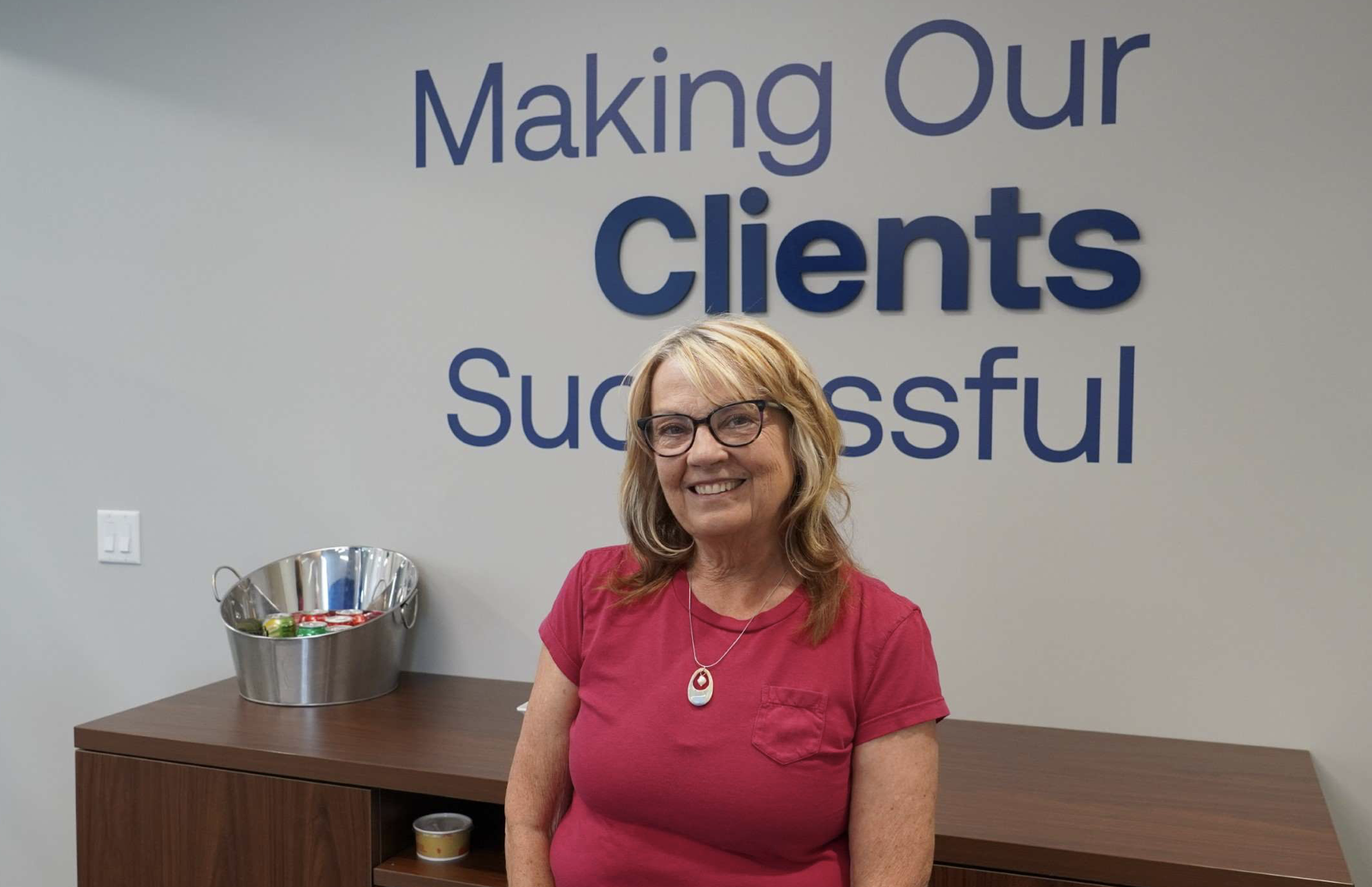
Interviewed by: Erin Elder
Interview date: June 10, 2026
Becky Lewis has spent a lifetime working with wastewater, primarily in her hometown of Wichita, Kansas, where fortwenty-six years she did environmental compliance with industrial pretreatment before becoming the city’s Wastewater Division Manager.

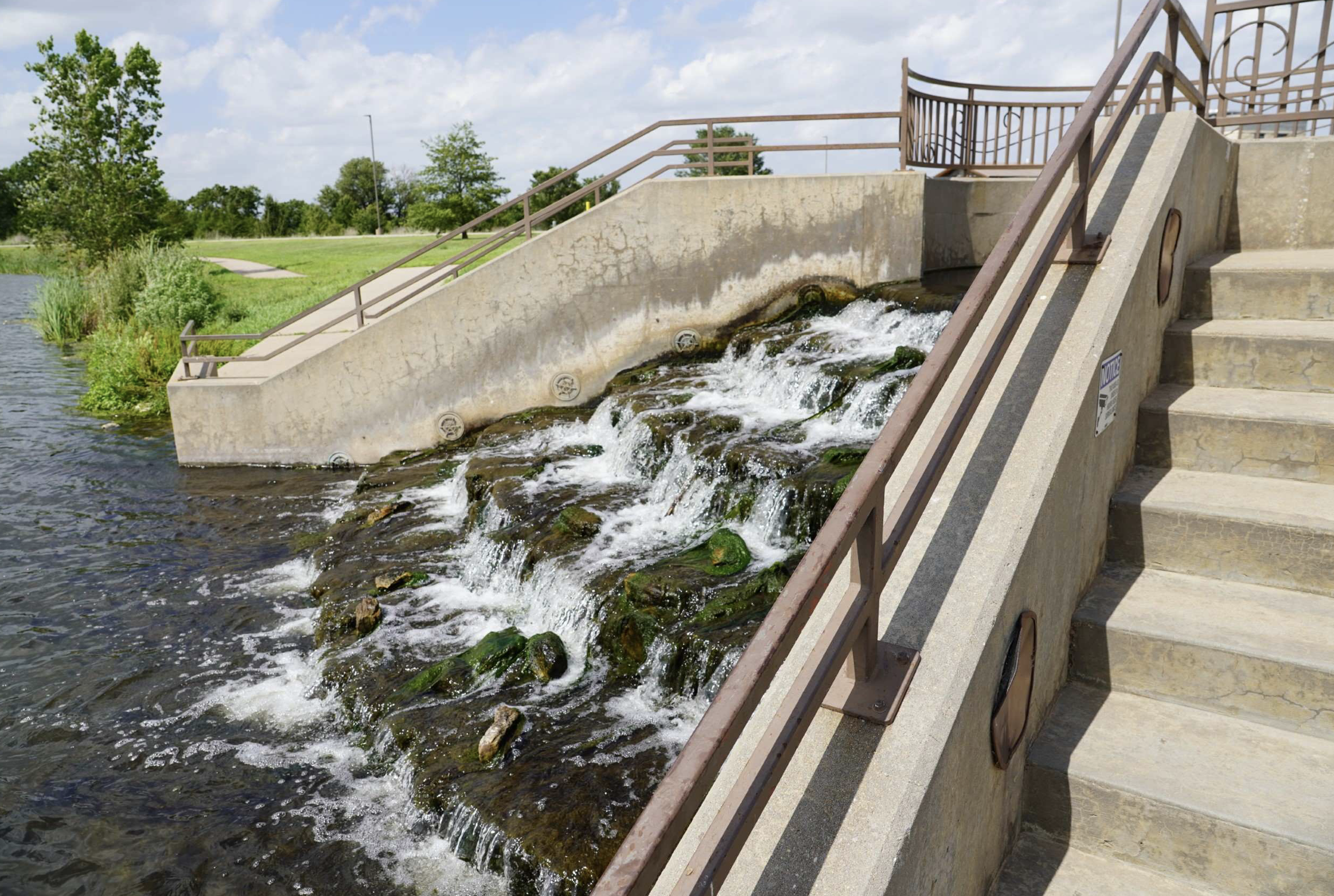
Wichita is a Midwestern city shaped by agriculture, manufacturing, and especially the aircraft industry—a history Lewis connects to her own family, including relatives who came to Wichita for factory work during World War II. Its water infrastructure is correspondingly large and complex. The wastewater system Lewis helped manage includes roughly 2,500 miles of sanitary sewer, more than sixty lift stations, and three treatment plants. The largest, a roughly 30-million-gallon-per-day facility, discharges treated water to the Arkansas River, while two smaller plants discharge into tributaries that eventually join the same watershed. Though the city has ample water resources in the Cheney Reservoir and a groundwater well field, drought and declining reservoir levels have made water conservation and long-term planning increasingly important.
Although Lewis is now retired from the City of Wichita, she has hardly left the profession. She works part-time for an engineering consulting firm, helping municipalities troubleshoot wastewater systems and pretreatment programs, and for a nonprofit that provides pollution-prevention training to small utilities around the country. Her work helping communities regulate fats, oils and grease that is harmful to water treatment systems, may lay the groundwork for future plannings around PFAs. Drawing on decades spent moving between the laboratory, treatment plant, regulatory system, and management office, Lewis now passes that experience to operators in smaller communities that may have limited staff and training resources.

Interview
12:15 – 18:28
BL: How I got the Wastewater Division Manager. Like I said, I was working, at that time, I was working as an Environmental Compliance Manager for the City and we didn't — it was kind of separate, because we didn't — because the water-wastewater was fairly familiar with regulatory requirements, we didn't really oversee their programs. We were looking at hazardous waste storage and some air quality, food service, restaurant compliance — those types of things. Even though I came from that, I didn't work closely with them after I took this position with — at that time, it was the Department of Environmental Health — but the wastewater plant had a big issue and they had a large bypass that discharged for a fairly long time, a significant amount of not untreated, partly-treated wastewater to the river. Just a tragedy of errors, how that happened.
EE: They didn't know that it was happening or that was sort of overlooked.
BL: No, they didn't know it was happening. There was an old gate that hadn't been exercising — a gate valve that blocks this partially treated wastewater — so it can go over to final treatment. It used to be the old outlet before we added the activated sludge treatment process which removes your larger organic materials, BOD, TSS. So there was partial treatment; there was some treatment, but it wasn't disinfected. So that gate got a lot of pinholes, a lot of holes and they probably eventually got some larger holes. They should have been — there was a requirement to collect river samples downstream of the discharge. The state did not identify the correct monitoring site, so the monitoring site that they had in the NPBS permit was actually upstream of the wastewater discharge. The City didn't know they were — and they weren't sampling at their outfall. They were sampling at the point of disinfection, so everything looked good at the point of disinfection. This was upstream of the bypass. They weren't sampling at the outfall, weren't sampling downstream. Everything looked great upstream, and so they missed this for a fairly long period of time.
EE: Like years or months or weeks?
BL: Months, I would say, I'm not entirely sure how long… but months, definitely. And when it all came to a head — which impacted this big, what they call River Festival. And when they do that, they raise the water levels in the downtown area with dam controls so there’s nice pretty river water while people are doing their river activities. And so there was not very much water flow down by the Wastewater Treatment Facility. We had been kind of under a drought and basically, atthat time, because of the low water flow and because of the temps — the temps were fairly high — it depleted the oxygen and there was a significant fish kill. So, then they tracked it back to the discharge…
EE: They saw the dead fish, that's how they knew something was wrong?
BL: Right.
EE: Wow.
BL: And at that time, the City management felt like the managers of the Wastewater Department should have caught it. There was a lot of change overs and a lot…the other thing that I will say, and I think you may have heard this theme, is that Wastewater Operations — or Water Operations, for that matter — don't a lot of times follow a specific standard of operation practices. It's kind of passed on to the next person — “you’re supposed to do this” and so there's not a lot of things and not necessarily… procedures available when things happen... So they asked me to come back to take over it. And that was the first thing I saw was, “how come we're not sampling down through the discharge?” “Well, because our permit says 47th Street.” Then I called the State and I said, “how come you have this identified as upstream of the discharge?” and they go, “upstream with the discharge?!” They didn't have that knowledge.
EE: Did they change it based on your feedback?
BL: Yeah and then I selected a whole new kind of management team operations. Well, honestly, a lot of people left because of this incident or got asked to leave because of the incident.
EE: Did the citizens learn about this situation?
BL: Yes, I don't know that they knew the intricacies, but they knew about the fish kill, obviously. They knew the City — we had to do a consent order with the State to get back in compliance. We did have to pay a penalty fine and that's all public knowledge. So right when I came in as the Wastewater Division Manager, all this stuff was happening. It was a challenge.
18:58 – 23:19
BL: I think our biggest thing then was we didn't have the standard operation procedure. If there's any message that I'dlike to convey: get SOPs in place of every little thing. For instance, we didn't have an SOP exercising gates. If they would have had that, they would have found it. There was no SOP about collecting samples at the actual outfall, you know, rather than just at the disinfection site. You know, just if those SOPs would have been in place, they would have found this almost immediately afterwards.
EE: Wow, so what does it mean to create an SOP?
BL: It's tough, you get with the person that maybe is most knowledgeable and just say, at the start of your day, “What do you do? What's the next thing? What's the next thing?” And then get the procedures to place and then a checklist. “Are they doing these things every day?” What has helped is technology — you can put asset work management programs in place and in fact, EFC has done a really good job with those things. I know Nick from the office here does a great job and I think those type of things, not only are you just making sure you're staying in compliance, you're doing more proactive maintenance rather than reactive. And in these days and times, you know, utilities usually aren't overstaffed. And using those type of capabilities helps your staff perform better.
EE: It sounds like a part of management too.
BL: Oh, definitely.
EE: Training people and overseeing them and doing those procedures and making sure that they're done regularly.
BL: Succession plans — having those things in place is always good — and again, that's a tough thing because a lot of times cities — for instance, it's just a big difference between working for an engineering firm — I see that they a lot of times take their new engineers under the wing and just work with them and go through procedures, make sure they have the live training in place. Cities, I think, a lot of times they feel like they can't afford that. Once that person leaves, then they look for somebody else, that person may or may not have experience. Depending on the pay rate, a lot of times — again, Wichita is a very competitive market employment wise — so our field staff, maintenance staff, probably can make a higher salary at these aircraft firms and they can working for the wastewater utility. So you might get somebody trained or you might even pay for a lot of the training, then they leave with that training.
EE: Oh, so like you were saying, there's a lot of turnover and things change, depending on who's in charge. When you were there, did you get some of those things set in stone or written down? Or do you think whoever came after you is redoing some of the systems that you created?
BL: That's a good question because I think some of those procedures have gotten documented more. But it's an ongoing process; it's very much built around whoever is doing the work… But I know that is something that was always important to my management, and I know it's important to the current management — to have these SOPs in place. I think it's a work in progress for the most part, but I think, I would say…. So I started when this all happened in 2013. Thirteen years later, I think it's better because I think they do have some SOPs in place and plus the asset management programs that they put in place. Not great, but I think it’s better.
27:37 – 36:47
EE: What kinds of future planning is involved with wastewater in that regard, thinking about precautions and planning?
BL: Yeah, so I think that's where our pre-treatment experience comes in. You're looking at PFAS/PFOS type of contributions in the wastewater. You know, again, those can't even be controlled at a lot of industrial sources because PFOS/PFAS is everywhere. But looking at encouraging people to maybe look at what type of material they're wearing on their clothing, looking at what kind of pans they're using for cooking. Some of these chemicals are found in some of the cleaning products, looking at those things. But I will tell you from the perspective of Fats, Oils and Grease source control, I think we did a really good job addressing that with food service establishments, restaurants, hospitals, schools. But we don't see the same thing in residential areas, primarily heavy residential areas such as apartments… they're fairly significant, again, your apartments are rental people and they probably aren't too concerned if they're plumbing backs up because they know they can call the landlord and get it cleared out. I think public education is important but I don'tthink it's going to be the big fix.
EE: What do you think the big fix will be?
BL: I think you have to go back to the original manufacturers and have them doing source substitutions.
EE: Which is what you've been and continue to be involved with.
BL: Right, right.
EE: So, tell me a little bit more about that, for instance, this restaurant industry. What are they doing that contaminates the wastewater or makes it more challenging and how do you address that?
BL: Restaurants primarily is food grease and the grease eventually makes its way down to the wastewater treatment plant, but primarily gets in the collection system in the pipes, clogs it, and then causes sewage overflows or sewage backups in people's homes and… on the surface. And that's why Wichita really started its Fats, Oils and Grease Program well before others because we had a restaurant that was discharging a lot of grease, causing a lot of sewer backups in area homes and those folks were going to sue the city for not controlling it. So then that's when we started the restaurant grease program. We started that probably, well before, a lot of other utilities did in the late ‘90s. And it's worked pretty well. There's always room for improvement, of course.
EE: Is that primarily an education system or do they have a protocol and a process that they go through?
BL: Yeah, we did an actual regulatory compliance. First, you try to do it with the voluntary approach, but if it doesn't work, because we're continuing to get these blockages, we put an ordinance in place that restaurants had to put in some type of grease removal device, either outside or inside, they had to maintain it. And they have certain criteria they have to do. They have to, say, pump out their grease interceptor every three months and so there's different rules and then they send that paperwork into our inspectors. The inspectors will go out and inspect the facilities to share compliance… I think that's a lot of it is just making sure and so that may be what they do with PFAS/PFOS, but I think that's going to be a harder thing to address.
EE: So it sounds like setting up a system, again, as kind of what that solution entailed, and regulation. How did the restaurants respond to that? Was their major pushback or did they understand the importance of following through in these ways?
BL: Yeah, of all the folks that probably give us push back the most, it is the restaurants. You know, you have these very small mom and pop restaurants that think they don't have any grease. You know, because they say, well, “we don't wash dishes” and then we say, “well, what about your grill?” And there's just a lot of things that they don't realize that they'redoing and… They may have one employee, so that cuts into their profits and restaurants don't have a big profit margin. That's why these mandatory things had to be put in place and a lot of times you put them under an order and if they don't comply, they get fines and, it's always kind of a fine line because we know that the folks that may be under a compliance order may not be staying open very long. And there's a lot of turnovers in the restaurant industry for employees as well as the restaurant itself. So, it's just being consistent and consistently making sure, ensuring the relations are being carried out. It's a lot of communication, our folks in the FOG program do a very good job of just consistently kind of taking, sending out the message.
EE: Have you done that in other industries with other kinds of contaminants?
BL: The only other one that we did a big push on and it actually used Wichita's guidelines for federal requirements is the dentistry industry. They have amalgam, which is a mercury, usually a silver mercury amalgam, that used to be used for fillings in teeth. Now you have the composites, but back in the ‘90s and the early 2000s, it was primarily silver mercury amalgam, and when you get your teeth drilled out, this stuff goes to the sewer. And we were seeing fairly high levels of mercury in our influent. And we did a little bit of research, thought it had to be from dentistry or for medical facilities that were using the old blood pressure units, the manometers that had the mercury measurements in the manometers and those also caused — a lot of times they break or spill and they just wash them to the drain not knowing. Because at that time, they didn't think anything about that. So, working with those folks — it really did start with a voluntary program. I will say both the restaurants and the dentists, working with their professional organizations — the restaurant associations, the dental associates — really helped. We started with them, so they could convey that message to their members and that was very helpful as well.
EE: Seems like some people, if they know they're contaminating the water, they want to do something to fix it, they would feel bad about it. Although if there's a big expense or if it seems insurmountable, they might push back. But I think most people want to keep the water clean…?
BL: Yes, I think so and I think that was maybe the difference with the dental community as opposed to the restaurant community. The dental community knew mercury was toxic so they really wanted to figure out a way to control that source. The restaurants, they're just working with food and it's everything that we eat, and there may be a little bit of dishwashing soap, but that's not the deal — it's the grease that causes the problems and so that's probably a little bit harder to understand. And even, you know, if they think, “well, it clogs up the pipe, it'll clog up our pipe first so the city won't be impacted.”
EE: Is that true?
BL: No, it's not. Sadly, it's not. It will definitely get into the collection system. The thing is, a lot of times, they'll use warmer water and the grease melts until it hits the cold water in the main pipeline and that's what causes some issues.
43:02 – 45:18
BL: You know, people in wastewater say that they like their jobs better, because we're more biologists and chemists, because we don't use a lot — the only time there's chemistry in place, typically, is either if they're chlorinating the water for disinfection; there may be some chemicals added for odor control. But as far as the treatment process is, it's all biological systems.
EE: What else do you find fascinating, or do you love about the wastewater side of things?
BL: Biological is pretty darn cool.
EE: Yeah, that it can do all that treatment naturally.
BL: And it's the different levels of bugs. You can't just have one specific organism; it has to be a level because they'redoing their thing. The big guys are eating the littler guys and the little guys are eating the pollutants that are in the wastewater. It's kind of a neat thing and when you think about the energy, that’s to reduce phosphorus. What we're doing is starving the organism, so they eat more phosphorus, and, all that is part of the process, depending on how much air you add to it or how much, you know, how you direct the flow through the facility.
EE: It's all alive.
BL: Yeah, it is. It is.
EE: Do you ever think of the bugs as like pets?
BL: Oh, we do get kind of excited when we see the Tardigrada.
EE: What is that?
BL: They're little water bears, so they're little multi-cell animals and they're pretty cute. So, Tardigrada is in fact, I've got my grandsons all convinced that Tardigrada are the best.
EE: So, when do they appear?
BL: Usually, they appear when the water quality is good, so we know that typically it's an indicator that we're doing our wastewater practices acceptably. However, again, it's a fine line, if we see too many Tardigrada, we know that the water quality may not be as good as it should be.
EE: And you can see them with the naked eye?
BL: No, I think you need a microscope.
EE: But you're looking through a microscope on this job, that's part of what you're doing?
BL: Yeah.
57:10 – 59:54
EE: I wonder if you have anything that you want to say to other operators, wastewater operators, future operators, you know, if there's something you want to say directly to that group of people?
BL: First of all, like I said, they're doing very important work that often goes unrecognized, so kudos to them. The other thing I would advise them is to get involved in their professional organizations. There's a lot of really great resources and it does help to network with folks from other utilities. You might have a problem, and you say, “Oh, yeah, I ran into that guy from… Kansas City that kind of had the same thing, I'm going to call him up and ask him how he dealt with this.” I think getting involved in your professional organizations is important.
EE: What are some of those that you've been involved with?
BL: Water Environment Federation, and there's that on the water side, there's American Water Works Association. There's also on the wastewater side, there's NACWA which is National Association for Clean Water Agencies. It’s all those are really great and certainly wouldn't have worked for this pollution prevention company had I not been involved. And when I say get involved, don't just go to the annual conference, get out on a committee, start serving, do things that you'll get to know other people because that's the one way that I think helps you not only… One of the things I did with WEF was, every year they have plant awards. I was on the plant awards committee so we'd go out and inspect the facilities that would apply for awards, see if they're eligible. And that was really neat to go to these other facilities and see what they were doing, what they were doing was good, what they were doing that needs some improvements and so, I would highly recommend being involved. And then, I'm also involved in this local thing called Wichita Clean Streams which we just do trash cleanups on the river; we’re selling rain barrels this Saturday, and those types of things. On the state and federal level, get involved with your professional organizations, but also get involved in a community organization, even your church a lot of times does things that. I've encouraged my church to do a day of service and they go out and clean up trash. Doing those type of things, I think is important.
EE: It's not enough just to do the job.
BL: That's right.
EE: Even though the job is a lot.
BL: Yeah, that's right.