Damon Shirk
Damon Shirk
Faywood Hot Springs, New Mexico
“I try to be pretty humble, so I'm just trying to not screw things up too bad. I've been chasing my tail the last fifteen years, just trying to repair and maintain.”

Date: April 22, 2026
Interviewer: Erin Elder
Damon Shirk came to water work through equal parts curiosity, conviction, and circumstance. Raised in Colorado and trained in biology, he originally planned to pursue medicine, but found himself increasingly drawn to water and environmental stewardship. Long before he became a certified water operator, he was fascinated by the importance of clean water and the ways human activities affect natural systems. After college he worked a variety of jobs, including nearly a decade as a park ranger in Colorado and later as a supervisor with Wyoming State Forestry, where he managed inmate crews on wildfire and disaster-response projects. But his path changed again when he and his then-wife discovered Faywood Hot Springs, a long-closed desert resort in southwestern New Mexico. Captivated by the property's history, geothermal waters, and potential, they purchased the struggling hot springs with help from family and began the long process of bringing it back to life.
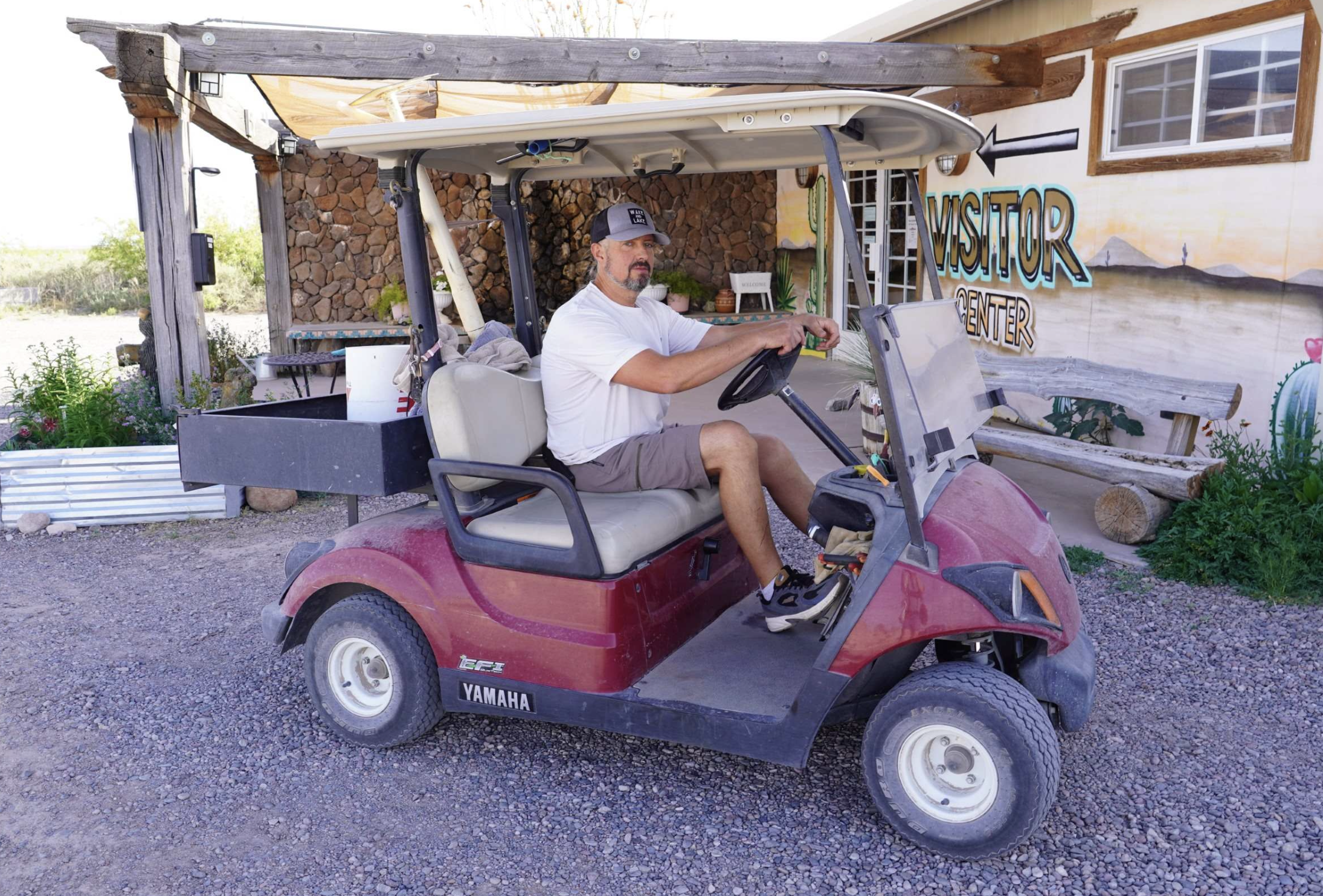
Today, Shirk serves as both water operator and caretaker of a remarkable oasis in the Chihuahuan Desert. Faywood Hot Springs sits on more than 700 acres of remote desert landscape, with thirteen soaking pools, cabins, campsites, and trails spread around a geothermal spring that emerges from deep underground at nearly 140 degrees. Unlike many water systems, Faywood's drinking water, soaking water, and daily operations are all connected to the same rare geothermal source. Managing that system requires constant attention—from monitoring water quality and storage tanks to maintaining pumps, plumbing, and infrastructure exposed to the challenges of heat, mineral buildup, and desert conditions. Yet the spring itself remains remarkably resilient, providing a steady source of clean water even through drought years.
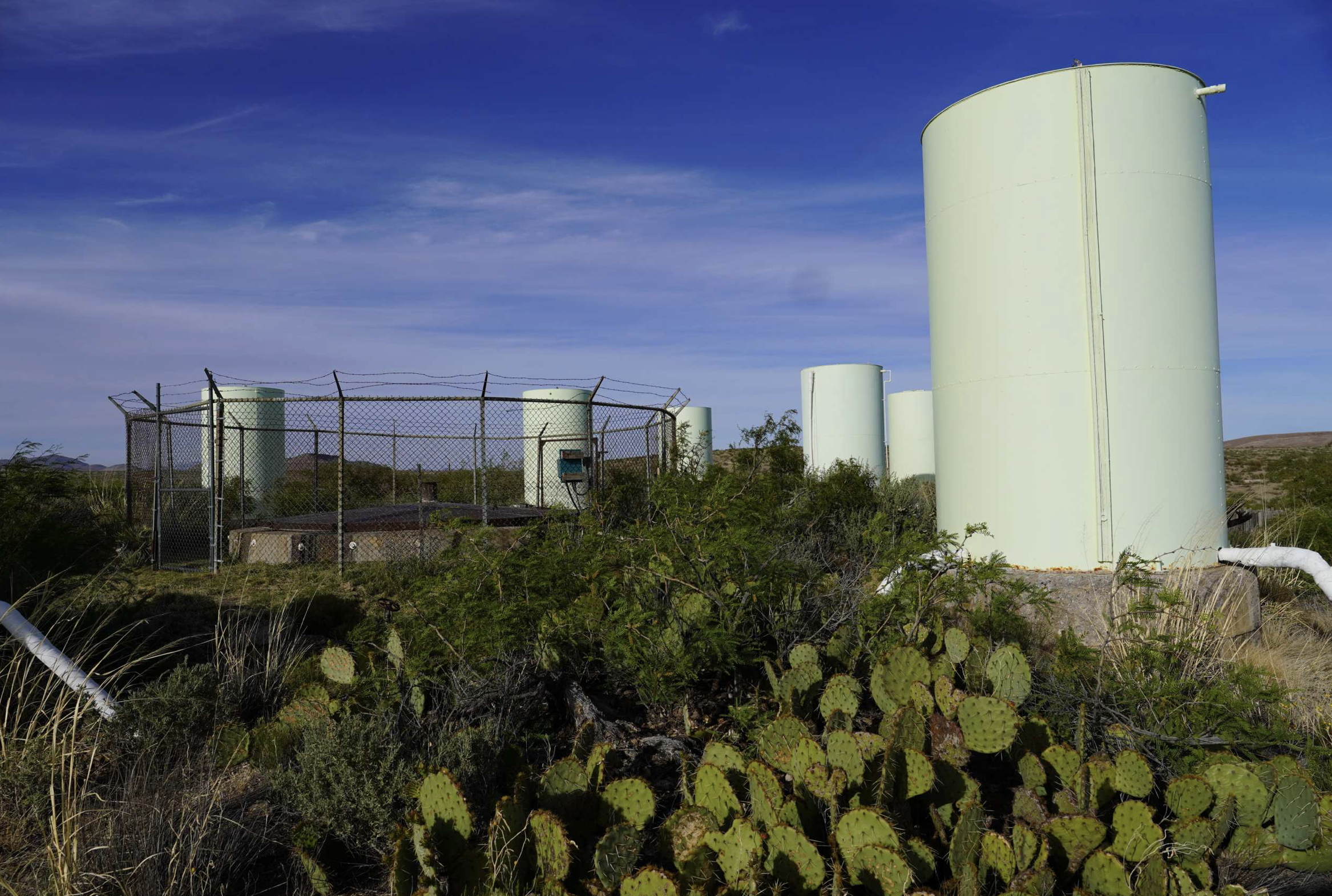
Since arriving more than fifteen years ago, Shirk has spent much of his time repairing, rebuilding, and maintaining a property that had fallen into disrepair before he acquired it. He speaks less about accomplishments than responsibilities, describing himself as someone trying to care for a place that has served people for generations. Part water operator, part business owner, part mechanic, historian, and host, he sees his role as helping preserve both the hot springs and the unique landscape that surrounds them. Looking ahead, he hopes the property will remain in family hands, passed on to the next generation of caretakers who share his appreciation for the water, history, and quiet beauty of this desert oasis.

Interview
Finding Faywood Hot Springs
DS: After college, I worked jobs, this career, that career, everything for about five years, and then my wife at the time, and I, we had a mutual interest in campgrounds. I was a park ranger in Colorado for about nine years [at a] place called Union Reservoir. I loved the whole campground-lake thing. I was working for the state of Wyoming at the time, Wyoming State Forestry. Inmate crews’ supervisor, I certified Wyoming State inmates to fight fires and run chainsaws, and we took them on firefighting and other natural disasters like I was fighting floods the last couple years before, anyway, I was doing that in Wyoming. My wife, at the time, and I were looking at campgrounds, kind of felt a calling to be an entrepreneur. Her dad saw this place for sale online: Faywood Hot Springs. One of his employees, his business was looking for a honeymoon spot and saw this, he knew we were looking at campgrounds. Well, it's not a lake with a campground, but it's a hot spring with a campground. I was just intrigued at that point and so was she, and we came down to look at it. The place had been closed down for about five years, which meant that it was getting more and more run down every day that passed which helped us to be able to afford it in the end, it was all we could do to, you know, swing it financially with the loan and the previous owner was gracious enough to finance us for a while so, it took everything we had. My parents and I, then my ex-wife and her dad. All five of us. The owners here at that time and we went in together. Since then, it's kind of changed hands, but it's still me and my dad.
Aspects of working with a unique hot water souce
DS: The Tufa dome -- this thirty-foot-high dome that the tanks sit on, was formed over the eons by the artesian pressure of the hot spring, ebbing over, and it would come out in a lens shape and make a uniform dome, like a big stalagmite, if you will and then it got to this certain height and it stopped coming out. That being said, it still comes up close to the top of that source. But yes, we have to pump it out with a two-horse pump. We have to get a high temperature rated one because it’s 137 degrees.
EE: That's the temperature it is when it comes out?
DS: Hard on motors and pumps. We pump it out into the tanks and it splits off and fills the hot side and then it fills the cold side at the same time.
EE: When you referred earlier to drinking water or the cooler water, it's the same water source? It's just been cooled.
DS: It's the same water source. The groundwater well that we do have, pumps into the cold, but that's just a small fraction, so it's essentially all the hot spring water.
EE: And do you have to filter it to be drinkable? Like how do you treat [the water]?
DS: Doesn't have to be, no.
EE: Wow. It's delicious.
DS: Yeah, I agree. This is a special water source; that was another attraction to this particular place. A lot of hot spring water, you can't water plants and grow crops and drink it. Because it's either got sulfur or even just up the road twice as much total dissolved solids, like in T or C. You know, it gets hard to drink that, granted, I do filter my own drinking water, so I'll drink half raw Faywood and half zero water. I haven't had any problems, in fact, when I first got here, I drank nothing but the Faywood raw water. But the trick is to stay fully hydrated, that way you stay flushed out and don'tdevelop stones and things like that.
EE: But it's created a bit of an oasis here too, with more deciduous trees and larger plants, and I mean, you see it coming down the road from a ways off, it's like, oh, there's water there.
DS: It is a stereotypical oasis in the Chihuahuan desert. Pretty cool, yeah this whole hillside just kind of permeates the whole water table and mesquite really seek it out. That's why I think most of the green colors probably mesquite and things like that.
EE: Does this landscape bring with it extra challenges to dealing with water? Or opportunities, I mean, it seems like water is very scarce in the desert.
DS: Sure, I wouldn't say it's tougher because we have the geothermal vent, the source, and barring a natural disaster, it's pretty reliable, so droughts and things like that don't really affect it, thankfully. Our well that's tied into the system is only 160 feet deep. It's pretty shallow for here and it will fluctuate in droughts and things like that, but the geothermal source is pretty reliable.
EE: Seems like the heat, maybe, is the biggest challenge for the system. You said it was hard on the pumps and machinery.
DS: The pump is, like I say, kind of susceptible from the heat, so we have to get like a high temperature bearing pump. Other than that, the pipes like to get scaled up. For some reason, the hot water system likes to scale the inside of the pipes. Something about the lower temperature, like from this cold, cooler storage tanks, it doesn't really bond to the inside of the pipes.
EE: What are the pipes made out of?
DS: PVC, most of our stuff is PVC. You know, we have some packs, but the majority of the system is two-inch PVC.
EE: Does it get clogged, or it breaks or what happens?
DS: It does. It's kind of like plaque in an artery and it's kind of just like sandstone. You can't really use like a rooter to root it out, we have to use acid, so, muriatic acid and wool. Block it off, boil it out, and then the nice thing about that is the acid is consumed by the scale, and then the scale is taken away by the acid, so it kind of becomes an inert mess of cappuccino-looking water when we're done. It's pretty non-toxic, it can just go on the ground again, won't hurt anything.
Safeguarding a hot spring
DS: The source being a geothermal vent, it's very sealed off to contaminants and things, you know, most places have to rely on surface water, you know, a lake. Even groundwater wells are susceptible to nitrates and things run off, agriculture run off, pesticides, feed lots, septic systems, things like that. But the geothermal source, at least from what I've read, is goes down to sea level, basically, all the fissures and the magma and is so hot. If there's any thermophiles, they don't even really repopulate in that. There are hotter hot springs, but this, I feel, is hot enough to, it stays perpetually clean and the previous owner did a big cleanout project about twenty five years ago of that source. Because over the centuries, it was open, and who knows what got thrown in there, let's be honest. Not only that, but just being open to the world, it kind of filled up with debris, like I say.
EE: What do you mean, open? Like, the source was open.
DS: Yeah, that's how the dome was made because of the artesian pressure. It was always flowing out to the world like when the Mimbres, the Apache were here. Even in the 1800s when, Colonel Hudson, when this was Hudson Hot Springs, that we have pictures -- it's just a pergola over the source, and it's all open. People would stick their toes in it and that'sabout all they could do because it's so hot. That being said, it was open to the world since, back, I believe, ever since they started pretty much bottling this hot springs water. I don't know if you got to see the old school Faywood glass gallon jug out there. They used to ship this mineral water, I don't know how far around the globe, but it was an actual thing that was shipped out from here as Faywood Hot Springs Mineral Water. Ever since then, you know, it was more important to protect the integrity of the source. They had a simple cap over it back then, which has since been redone a couple times, the last [time] by the previous owner, which it's a really good cap. Now it's very sanitary, so nothing's going to get in, but before he did that, he cleaned it out because the flow was down to twenty gallons a minute and this is supposed to be a fifty gallon a minute, class C hot spring. And he did it, I think it took like a whole season. They pumped it out, scooped it out by hand, winches, I mean, pulleys and buckets and ladders and I think he even dressed the inside, made it a nice concrete bowl in there about seventeen by twenty feet, then it fissures out. It's very sanitary, so the point being the hot spring water is a very clean source that's resistant to any kind of contamination.
Stewarding an historic hot spring
DS: There was a baseball team here for about a season. It's pretty windy and nasty and dusty for spring training though, I think. There were two hotels here. Colonel Hudson built the first one in the 1880’s, the Casa de Consuelo, and there'sstill ruins of it around the campground. You can see in the cabins. Billy the Kid's mom was here; the original bathhouse with the Casa de Consuelo was a tuberculosis clinic. From what I understand, she was here getting treatment for that. Then in the 1940s, they built another hotel over here on the northeast side, kind of where the private pool parking lot is now. And when we excavated that private pool parking lot, we had a tough time with the little tractor because we kept digging up, like bowling ball size rocks -- very round, obviously worked, masoned, looking stuff, like bowling balls in soot, like really hard to smooth out. And it's like, “what is this?” And then finding small photographs, the vegas, the columns of the veranda of the old hotel, that was those stones, I could tell they demolished it. I think it was just hard economic times back in the late ‘40s. Something like that, there's a bunch of little tidbits. There are grinding holes on this side of the tufa dome from the original Mimbres Indians.
Solving all kinds of problems, including making a space for nudity
DS: Before we even opened up, two of the eight cold tanks are taller than the rest because they're downhill, but they'reall to the same top level and one of those was leaning, like the Leaning Tower of Pisa. We knew that we better fix that pronto and so we did, we plumbed it up again. Shoot, Erin, everything had something wrong with it when we got here, whether it was the water system, the pool drainage system, the pools, the electric, the cabins, you pick any one thing and it had some sort of issue. Like I say, it's just been quite the endeavor to get it repaired properly. You know, we made the clothing optional campground, just kind of, hadn't really even considered such a thing existed. But when you just kind of improvise, adapt, overcome in life, when you see people that are nude in the traditional campground, you think out of the box, “Hey, maybe we should make a place where they can do that.” And then we won't have to, you know, smash their party, or, you know, the guy working on his F-150 in flip-flops and a smile. It's like, “Hey, this is supposed to be clothing required over here.” So that's when it kind of dawned on me, maybe we should make some camps, and it naturally went with the clothing optional pools over there. It's in the same area, so I was really pleased with how that came about, and it stays busy over there. So, you know, that helps us make ends meet and stuff.