Eddie Mendoza
Eddie Mendoza
Tyrone Town Site, New Mexico
“It's a great job, honestly. Are you going to be rich afterwards? No, but you know that you did something positive for the community.”
Date: April 23, 2026
Interviewer: Erin Elder
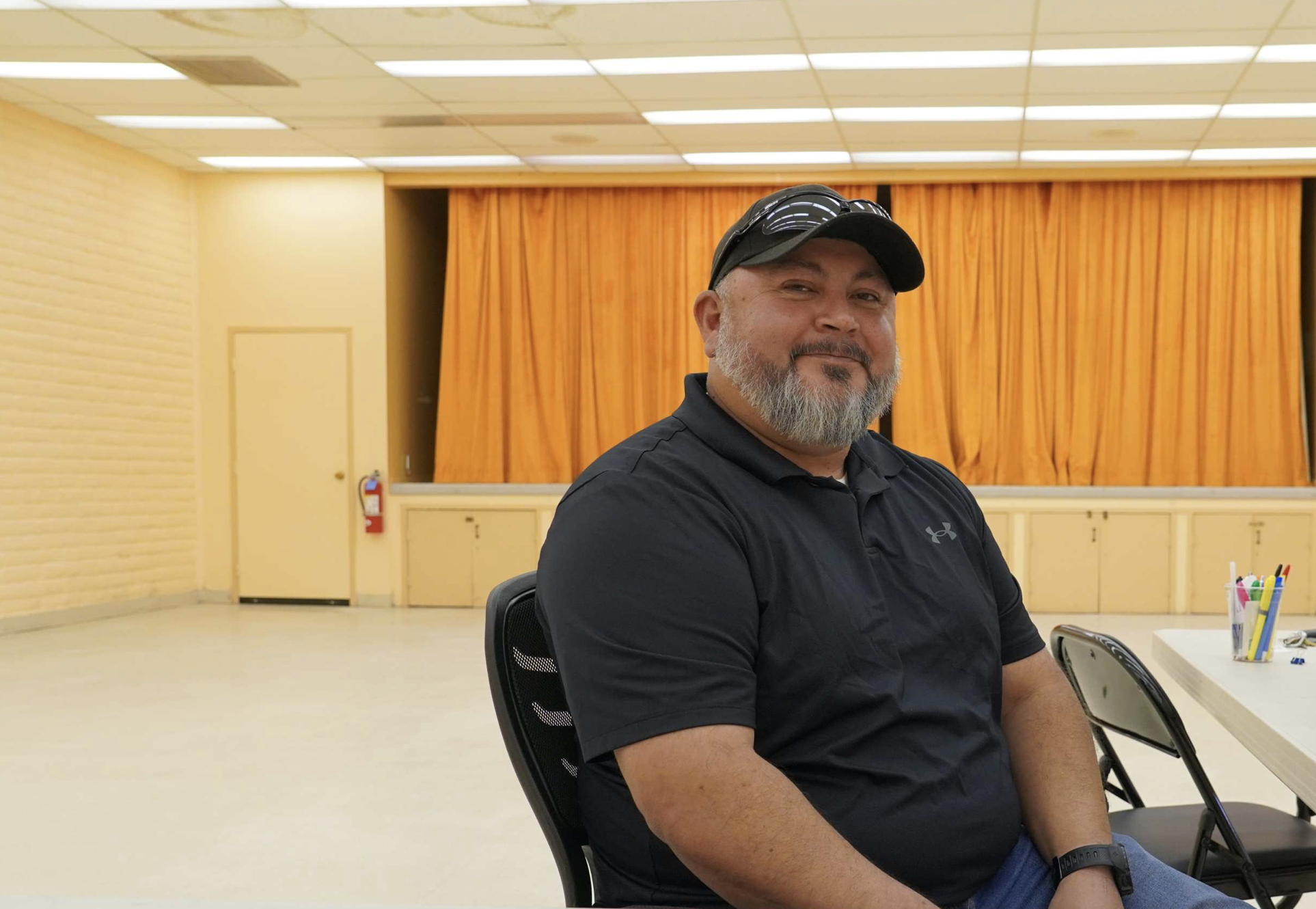
Eddie Mendoza is a lifelong resident of Grant County, New Mexico, and a water and wastewater operator whose career has been shaped by decades of hands-on problem solving. He entered the field almost by accident as a teenager, after taking a summer job with the Town of Silver City while finishing high school through a work-study program. What began as an alternative to construction work quickly became a vocation, one that his grandfather worked unbeknownst to Eddie. On the job, Eddie discovered he loved the combination of math, physics, and practical troubleshooting that water systems require. He spent twenty-seven years with Silver City, working first in distribution and later with the town’s complex well and pumping systems, where he helped modernize aging infrastructure and maintain water service in a mountainous desert environment.
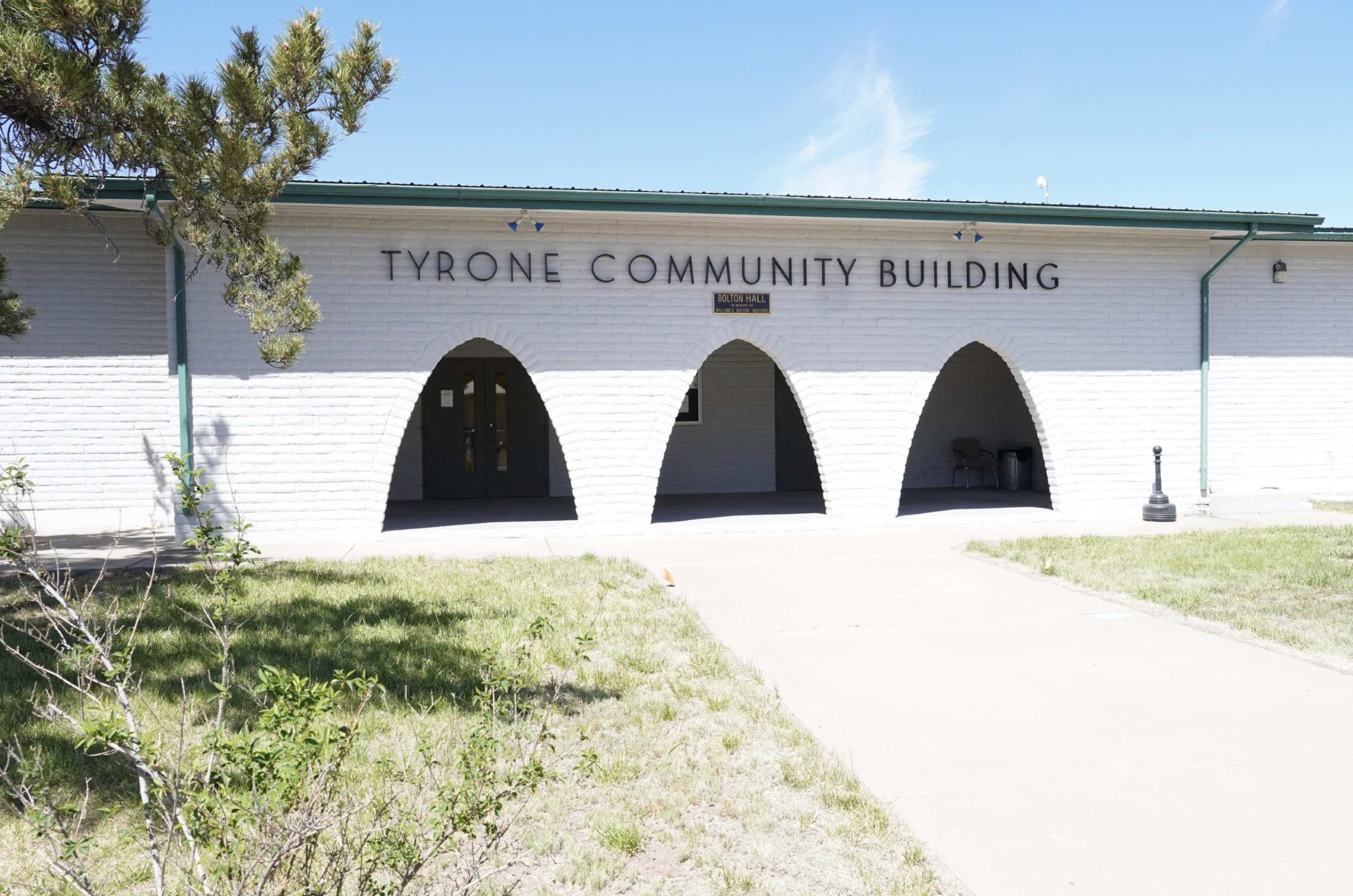
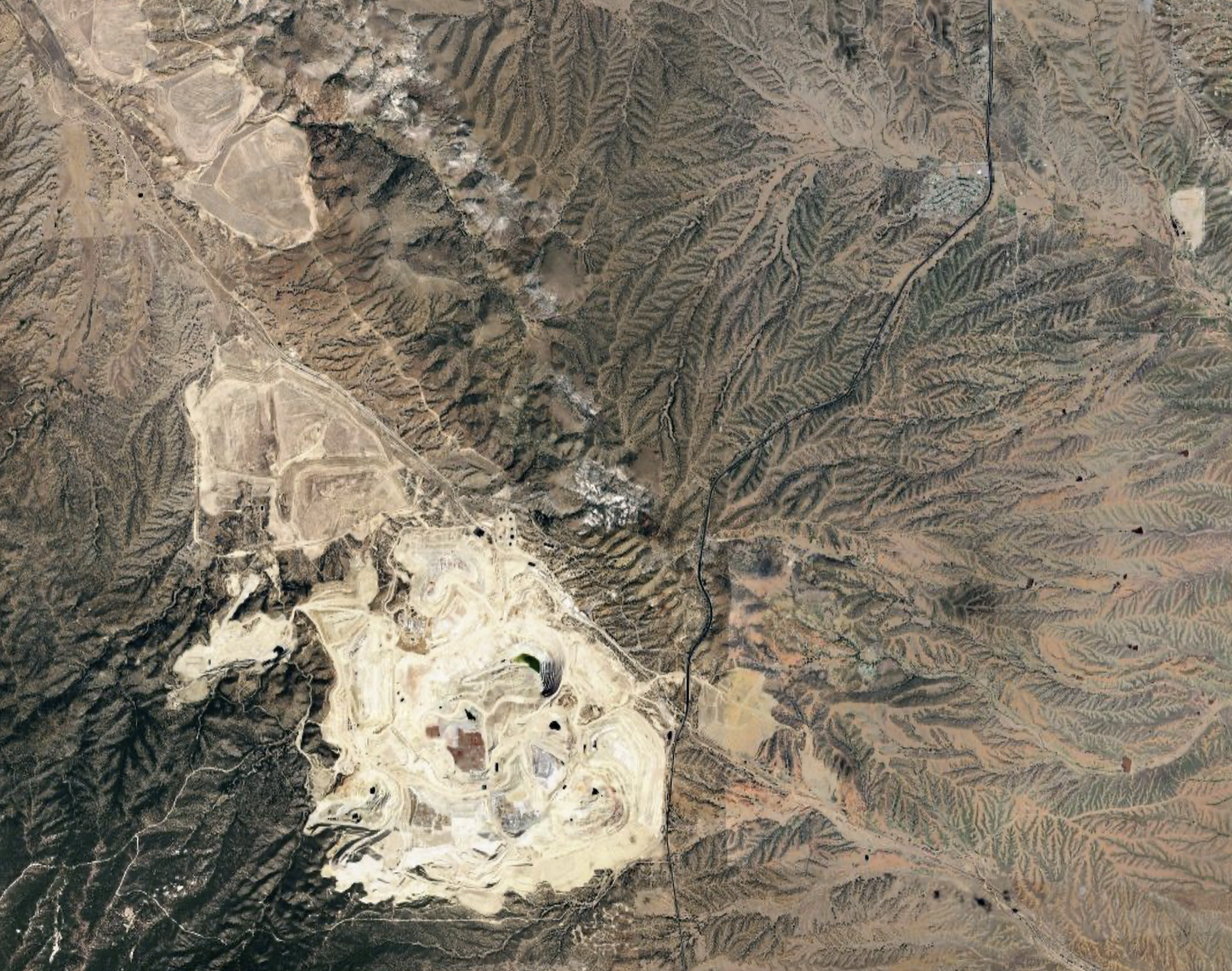
After only two weeks of retirement in 2022, Mendoza was drawn back to work by both curiosity and a sense of responsibility. He continued working in water operations at the nearby Tyrone copper mine, before taking on a larger role at the Tyrone Townsite. Today he serves as operator for the community’s water and wastewater systems. Tyrone is a small, high desert community of just over 300 homes that has struggled to operate as its own independent utility system. Once privately managed and burdened by failing infrastructure, the community has been rebuilding itself through state funding and local effort. Mendoza started his own water management company, TWWA, through which he oversees not only water quality and system operations, but also compliance, project management, and community communication as Tyrone undertakes major infrastructure upgrades intended to secure its future.
Interview
Elevated water tank divers
EE: What other kinds of problems have you encountered on the job? Love to hear some stories.
EM: Let's see, we have, for Tyrone, we had an issue with our water tank. Tyrone is very strange as it, it has an elevated storage tank, which isn't strange for New Mexico, where there's flat areas, but because we're in the mountains, it's strange to see an elevated storage tank here, but the mine itself; who owned Tyrone before, was basically using the water pressure from the town of Silver to fill the tank up, and it would maintain its own pressure for the system here. That was pretty smart, but, again, it was built in the 1960’s. One day I went, and we were leaking from the bottom of the tank, which is connected to our altitude valves vault, which meant that I couldn't change anything for the vault until I pumped the water out, but the danger of being in there was quite high.
EE: In the tank?
EM: In the vault because water was coming from the tank into the vault. It was basically a trap because you have to get in and down this little access point to work on the altitude valve that controls the tank, but it's constantly being underwater. We had to get that fixed, but what was strange was, I thought this was only an easier, you know, an easy fix or a normal thing, so I contacted almost everyone I knew that had any elevated storage tank, and they weren't sure. They didn't and they hadn't run into that issue.
EE: How high is it in elevation?
EM: It is ninety feet, ninety-six feet to the top, so it's quite a ways up there. After some, many phone calls, and pumping out to make changes in that vault. I was able to contact a diving crew out of Farmington, who was willing to come in and basically dive the entire depth of the tank to the bottom and epoxy a plate over the leak. The leak was actually, a weld from the drain line that had given, so hence why it was coming in because the drain line was traveling through that little vault where the pipes are. We were able to get that sealed off and we were like, okay, now we have a fire hydrant about a block away that's now our drain if we needed to drain the tank. That was pretty, pretty difficult…
EE: You don't need to drain the tank though?
EM: No, the problem with draining the tank is that this system requires that tank to be in line, there's no bypass. If I drain the tank, the town is without water.
EE: And that would create all kinds of problems.
EM: Absolutely, all kinds of problems. People are without water, and it triggers an immediate boil order, and everything else is going in with the regs, as well as notifying drinking water, that they would probably come in to see what's going on. We didn't want to drain the tank, so that was one of the things we did was we were like, okay, we're gonna get a diver, find the diver, who's willing to do it. The five diving crews that I used in the town of Silver, none of them wanted to do it, so I had to find somebody.
EE: Because it was so dangerous?
EM: Yes, they considered it so dangerous because of the depth and the unknown, because I had the schematics, but I couldn't tell them when the last time, the last portion, basically the stem, the middle piece going all the way to the sphere, had been dove, we didn't know. I didn't have any documentation on that, so they felt that that was too much of a risk. Luckily, I found somebody that was willing to do it, and they did a great job. It was done within an hour.
EE: Wow.
EM: Yeah, you know, it was weeks and weeks and weeks of preparation to get done in an hour.
EE: Well done.
EM: That was nice, yes, it stopped the leak, you know, and it was getting worse, so we were afraid that it would give in at that point, then we're in deep trouble for this little community, that was scary, but not too bad for Tyrone.
Lightning striking a control panel
With the town of Silver, that's different, I've had a number of big items that have happened there. Everything from we had, we've had lightning strike, a major pumping system that took out our entire control panel.
EE: Wow.
EM: All controls for the building were basically, non-operational, they would have had to been replaced. And so, it was in the middle of summer, when water use is extremely high, and our system, like I said, is leapfrog, so we have the wells, well fields pumping into one set of tanks from there, gravity fed to another set of tanks which then boosts to our middle set, W Mountain, which then boosts to another set of tanks in PA. And right in the middle, which is our swan street, that's what got struck by lightning, I literally knew I was on the clock, I had two days to find a way to start pumping water up to the, the tanks, or else I was gonna have a major issue for all the northern side of town, as well as the community of Pinos Altos, which is a small town, just north of Silver City, which gets water from Silver. That was, that was pretty nerve-racking once we found out how much damage was done. We were able to test our well or our motors on our boosters,those were fine, thank goodness. We were like, great, we were.
EE: How soon did you know that it was out?
EM: Luckily, we had automation there, so it notified us the moment that struck, that strike happened, we were out there. We got there, we saw the damage and there was no, you couldn't miss it. The boxes were blown up, literally.
EE: Wow, like black.
EM: Yes, black.
EE: Exploded.
EM: Yes, completely, what we didn't know at the time was, it had also created an issue that the transformers for the power company. Under no load, it would show a regular voltage of four hundred and eighty, but the moment you put a load to it, it would go to full load amps, like 17,000 volts. Yeah, they didn't know that at the time, but we were still trying to figure out what do we do? We can't, we can't order a control panel immediately. If so, it was so specialized that it was going to take us weeks, we had two days. We realized, okay, so we had a certain size of motor there, which was a hundred horse motor and like I spoke before, we had just bought, we had just upgraded our well fields with new motors and new control panels. So we decided we were going to go to one of the wells that was least in rotation, and we basically, which was a hundred horse motor, and we completely took all of the electrical components out, the entire box, put it in our truck, and drove it to the pump station, and begin helping the electrician wire it in.
EE: Wow, good thinking.
EM: Yeah, that was the only thing we could think of to get us water within twenty-four hours.
EE: And then did you have to order a new panel?
EM: Yes.
EE: That still took a few weeks to...
EM: Yeah, actually, because it, you know, it was a lightning strike. It was one of those insurance policy type things, so it did take some time, but we were able to replace those. While that was being done, we had our temporary fix, so, it worked out great. We were able to have that system up and running within the day. I think it took us a day to get everything taken care of. It wasn't on our side what ended up happening was once we got our control box wired in, werealized that there was something wrong with the incoming power as our box would shut off and then the power meter would blow up. Which PNM, our power company, saw that, realized, and had to bring in, they too, they don't necessarily have transformers just laying around. Luckily, they were able to get a new set of transformers in, that was our biggest concern was the wait, but we got that in and we were back in operation within a day and a half; thanks, no one knew, no one knew what had happened, no one knew.
EE: I was gonna ask if any, if the community was aware, no?
EM: No.
EE: Wow.
EM: They had no idea.
EE: What's that like having a job that's so important but so invisible?
EM: I don't mind it, to me, it was nice. I knew that, it's important, a lot of people don't realize how important it is until you don't have water.
EE: Right.
EM: You know, it's something that's required for everything. I take, I took pride again, it's my system, if I'm the operator, if my name's on that thing, I want to make sure that everything's on par. My biggest thing on that north side is the dialysis clinic and the hospital, both receive water from the north end, so that was my biggest concern was how many people were not going to be getting service through the dialysis clinic or the hospital, you know, being without water. We also were looking at how we could change and which we did, during that time we were looking at water. It would have been a lower pressure water; some water to the hospital, but it's nice, I don't mind being invisible.
Job Succession
EE: What's gonna happen when you retire from this job? Do you have a successor? Do you think somebody... will be in position to take over?
EM: I'm sure, I'm sure somebody will be willing to take over. That's a great question, I'm sure there will be somebody that's willing to take over this little community, this system, where I worked before prior to the town of Silver City, it was pretty nice to see two young guys. It kind of reminded me of myself and my partner, that at the time we finally got two operators. When we retired, we retired about the same time because we went in at about the same time. Two of the younger… they had some, they had experience, they had went with us a few times, but they were still pretty new, but they were more than willing to take on the challenge. For the town of Silver, which was great. I love to see that, as a matter of fact, I talk to them almost, at least weekly, but sometimes on a daily basis about issues that they have. I told them that, you know, I drink the water, I love drinking my own water. I drink the water here, so let's make sure that it stays the way I left it. They were like, “Are you sure I can call you?”, “Absolutely”. I've always been on the phone with them when they have issues and I will always do that, I think.
EE: Did you have someone like that that you could turn to when you were new on the job?
EM: No, no. I had to learn on the fly, my supervisor did show me some of the tricks that he had, but we were in transition. We were going from old school to new and it was when we upgraded our systems, it was kind of like learning something brand new. Everything was new, what you knew was a problem before was no longer there anymore than what I figured out as an operator was I had to learn chemistry, hydraulics, electronics, a little bit of SCADA systems and computer programming.
EE: A little bit of everything
EM: A little bit of everything because, you know what, things never break on Monday at ten o'clock. They happen on Thanksgiving night, you know or Christmas day or at three o'clock in the morning and if you're able to remember how that was repaired by somebody and be knowledgeable enough to know the ins and outs, the safety concerns, and you can repair it yourself, again, nobody knows that there's an issue. That's one thing I took pride in, is most of the time nobody knew there was an issue.
EE: What would you say to someone who is considering this job, maybe on the fence? It sounds a little intimidating, it sounds a little interesting, what would you say to convince them that this is a great job?
EM: Give it a shot, I say, give it a shot. If you are into loving the outdoors, I mean, you're always outdoors, you're always working, there are some tasks that are constantly the same thing, but honestly, it's always the same thing, but a different flavor in some way. If you want to be challenged, this is a great occupation to be challenged because there's never enough that you can learn. That's one thing I've always had in my mind is you learn something every day, something new, something different and you can challenge yourself to be better at something within that system to make it better.
EE: It seems like a really interesting way to be involved with the community and to have a sense of place, you know, you're working with the topography and geology of the place as well as the people who live there and it's kind of a view into how the world works.
EM: Yes, absolutely, absolutely. You learn so much because as you're going through, you realize, you can't live without water, and you can't live without clean water. You've got to make sure you know what you're doing. If you don't, there's plenty of literature, there's plenty of textbooks, there's plenty of now, Rural Water, there's out there to help out with small systems, or there's operators now that, if you look on the website for the Drinking Water Bureau, there's operators on there that you can call. I've always given my number out constantly, so that way if they run into issues, by all means, give me a call. It's a great, it's a great job, honestly. Are you going to be rich afterwards? No, but you know that you did something, you just did something positive for the community.
EE: Work that you can be proud of.
EM: Absolutely.
EE: That counts for a lot.
EM: Yes and that's the key, if they don't know, then you did your job. If they didn't have to run out of water, if they didn'thave their sewer coming out into the street, you did your job.
Community education
54:43.16-58:48.98
EM: I think it's a positive thing for the community to know, because everyone that I've spoken to, even from adults to the elderly gentleman that was so, he was so anti, I guess it was kind of government, but he was anti the water system and thought that when I finally was able to talk to him and answer all his questions, he was on our side. He understood why we did things and how we did things. You know, it wasn’t and I told him, it's always good to have that kind of an open mind and or, you know, a curious mind to ask the questions.
EE: What was he concerned about or afraid of?
EM: Chlorine, he was worried about the chlorine and how much we were putting in, and also the contaminants that he thought that we were withholding from him, that we weren't giving him the true results from all of our testing. And that was one of the things, the CCR was very important, I liked that. I remember when the first CCR came out, ConsumerConfidence Report. To me it was great because it was something to give to the community to show. I remember our first CCR, we listed every contaminant that we tested, which was just pages upon pages upon pages. Now we stopped doing that, of course, because it was kind of a waste, but that was a perfect example, that gentleman thought that we only were looking at the things that were listed on the paper. Once I was able to explain to him and actually go and show him everything that we tested, he was like, he was in awe with the entire amount that was tested. I said, “Absolutely”, and I gave him the schedule, and I even showed him the drinking water watch. I said, “If you're concerned, you can get online and look at that stuff and if you have a question, there's the operator's name, there's the owner's name, there's their email, there's their phone number, you give them a call”. It was nice to see a change, even to the little kids, we used to have a program; we had the water festival once a year. Here in Grant County, I would go to schools and basically do a presentation on where your water comes from and then we'd have, where your water goes after you use it. Basically, to educate the kids like, “Hey, let's not be wasteful”, wet your toothbrush, turn the faucet off, brush your teeth, turn it back on, rinse off- instead of running it, and then explain to them, with visuals, we would take a bucket and show them, there's how much water you're wasting while you're running. That's all the different things to teach the kids and I'm surprised at how many kids were like so in awe and talked about, afterwards, that they were really intrigued in it, and in the whole, the whole thing, understanding what the rain was, how important it is, how important our groundwater is, how important it is to keep it clean, not waste it, you know, be responsible with it. They said, “Oh, I'll tell my dad to stop washing his car so much. I'm like “Dude, go ahead, by all means, you tell them that”. At the end, we had parents coming, they were used to, they heard about it and the parents now were coming to just see the presentations as we had a mock model of our wastewater plant. We had somebody going over the wastewater, I did the water, I had all my slides and it was interesting because it gave the community an understanding of their system. And I think if you know about it, knowledge is power, and people can work together as a community and understand that.