Jacob Leyba
Jacob Leyba
Inverness Public Utility District, California
“The way the world is going, with more contamination and global warming, water is becoming very precious, and I think people notice that. We do play a very importantrole in making that happen, bringing safe water to the communities.”

Interviewed by: Erin Elder
Interviewed on: March 16, 2026
Jacob Leyba never expected to become a water operator. Originally from Mexico, he moved to California more than twenty years ago and worked a variety of jobs—including construction, property management, school bus driving, and teaching art and music—before applying for a position with the Inverness Public Utility District. Looking for work closer to home after a long commute, he entered the water profession with no previous experience, relying instead on curiosity, dedication, and the guidance of two veteran operators who mentored him through the trade. Six years later, Leyba is a certified treatment and distribution operator who has embraced the responsibility of providing safe drinking water to the small coastal community he now calls home.
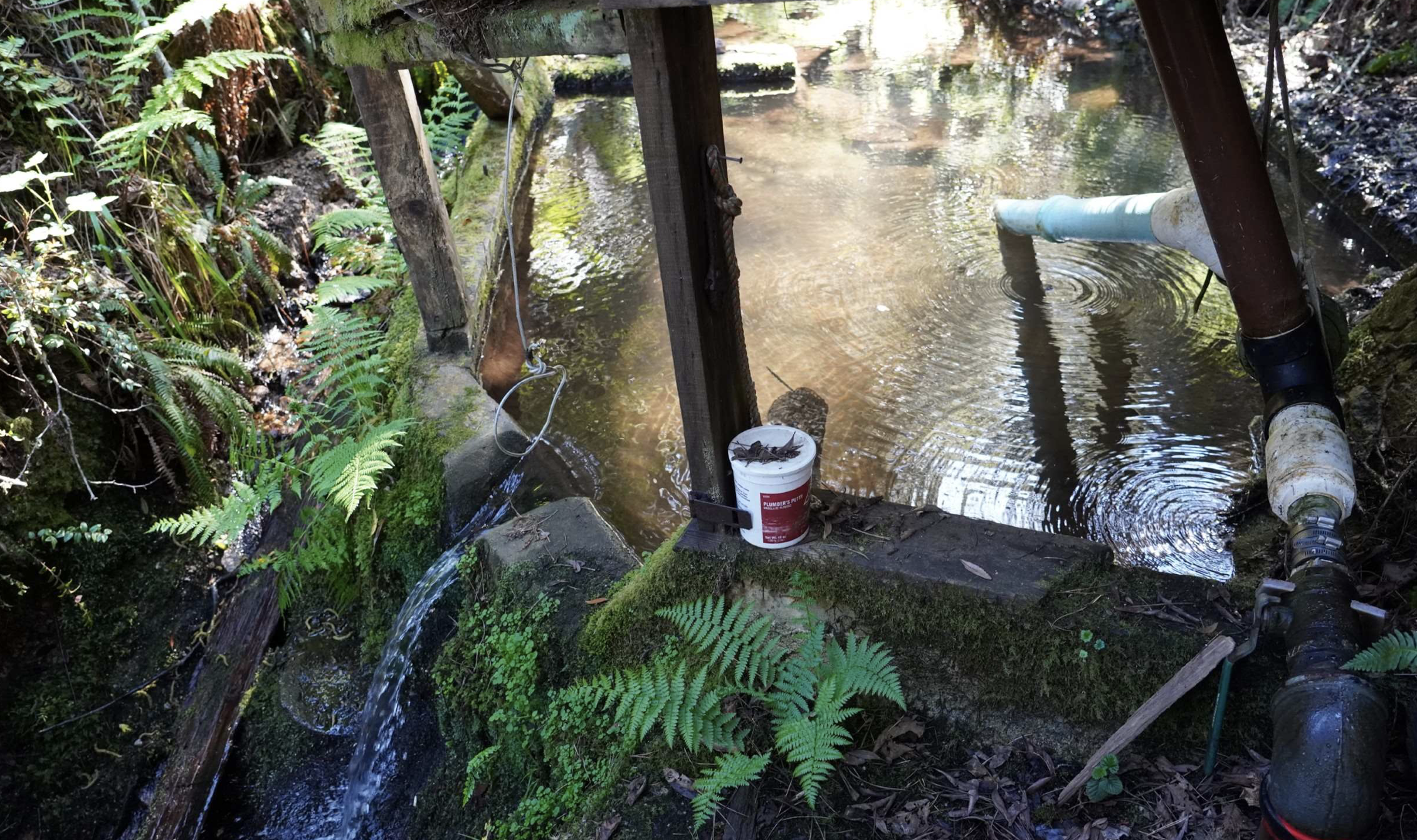
Inverness occupies a narrow strip of land between Tomales Bay and the forested slopes of Point Reyes National Seashore, where fog, redwood forests, and mountain creeks are as essential to the water system as pipes and pumps. The district serves just over 500 connections, drawing surface water from three creek-fed valleys before treating it and delivering it to residents year-round. Leyba describes the landscape as both beautiful and demanding: droughts test the community's limited water supply, while the region's persistent coastal fog nourishes the redwood forests and helps replenish the creeks that sustain the system. Working on a field crew of only three people means every day requires a broad range of skills—from water treatment and watershed management to repairing leaks and maintaining aging infrastructure—but it also offers a close connection to both the landscape and the people who depend on it. As one of the next generation of operators, Leyba now finds himself passing on the lessons he once learned from his own mentors, helping ensure that the knowledge required to care for Inverness's unique water system continues into the future.

Interview
A water system dependent on fog
JL: Yeah we have a very special water system because we got three valleys. It's first valley, second valley, and third valley, and we get water from the creeks. We have surface water, and the first valley, we have, we call them divergence, where we divert water to our filter plants. The first valley, we have D1, D2, and D3, the 2nd valley, we have, D4, D5, and D6, and then the third valley, we have D7 and D8. Those are the main sources of our water and one of the very interesting things about this is that we get a lot of fog and especially on the, when we don't have enough water, the fog really helps, because those redwood trees in the mountain get the fog and the water just permeates down to the roots and then goes to the creeks where we collect the water from. We do a little bit of fog collection, if we want to call it that way, with the trees.
EE: Are they also spring fed or how, what come, is it just from the fog that comes down through the creek?
JL: Mostly from the fog, but no, yeah, there is springs, just all year long. It depends on the year because, for example, three years ago we had a very bad drought and the creeks didn't have a lot of water, so we had to actually, tell the town, the community to reduce uses and to be mindful.
EE: How did that go?
JL: Oh, the response was incredible. People just really understood the environment and the resources of the area, that they're limited, especially in that year, and their response was really positive, and they were also asking us how we were doing, and if he was okay… even some people was telling, “Is it okay to take showers?” and we were like, “Yeah, you just take showers, use the bathroom, just moderate the usage from watering on the garden, the lawn. It was good, but thanks to the fog, we were able to get by that hard year.
EE: So, you have fog even in drought years?
JL: Yes, we have fog all year long, because we're so close to the ocean…
A plant washed into the sea
JL: But in the ‘80s, they did have a very bad… I think it rained two feet of water in eight hours.
EE: Wow.
JL: And this actually, this valley, the first valley here, all the mud and it slide down to the bay and they actually had the first filter plant was in the first valley, and the plant was swiped down to the bay, and they had to just do a lot of work to be able to get back on service, but I think all the communities start coming out and help, for that time.
Lineage through mentorship
JL: Yeah, it's a lot, a lot of studying, I had to do with my personal experience to be able to achieve those certifications and a lot of time I spent with my mentors, that are now retired. Ken Fox was the Senior Water Operator. He was working herefor forty years and his brother was the Water Superintendent who was here for thirty eight years so they spent thewhole life working here and I feel lucky that I was able to learn from them. And yeah, they tell me, a lot of the knowledge I know and how to be careful with the system and also be very responsible because, public health is in our hands, right? We make… our goal is to make safe drinking water for the community.
EE: Yes, I'm so glad you got to learn from them. Are there any other things that you learned from them that you remember, that you think about?
JL: Yeah, Ken Fox was teaching me a lot on the treatment side, it was kind of his specialty. How to operate the plants, look out for the pressures, make sure that we do a constant cleaning on the unit so they don't get clogged, falling, keep everything running smoothly, service the pumps, fill up the chemicals, the cow stick for the chemical cleanings, the ultra-filtration and how to just always be alert and looking at the set points or how to troubleshoot different situations… can happen. The other mentor, Jim Fox, he taught me a lot on the distribution system. How the mains are running underground and because we have a lot of dead ends here that we have to, we do a constantly, yearly flush program, that we make sure all those ends are clean, because they accumulate particles. He was really good on the maps and the distribution and all the leaks, how to find out if it's any problems with the mains and just look at the saddles and if you should replace them or leave them if they're in a good condition.
EE: Maybe one day you'll be able to mentor a younger person.
JL: I'm actually… because I'm very dedicated to what I do and I think this is one of my things my father taught me that he always said that if you're going to do something, do it right otherwise, you don't do it. And when I start working here, I basically didn't know a lot, but I always was asking questions or being with them to learn and I like to pay attention to the details, so, now I'm teaching my other coworkers that have less experience than I do. I do feel fortunate to be able to have that experience with my mentors.
EE: It's like a lineage.
JL: Yeah, and it's very important because like we said in this time it's less and less operators coming to work or that want to be trained or go to school for it. And there is a lot of people retiring that they have a lot of knowledge and experience, so if we are able to learn and pass that knowledge, I think that's what we need to do and we need to encourage the new young people to learn. I think, if they learn how the system works, they would be more interested in working on the water.
A delicious, protected watershed
JL: I think since I've been here, I've been learning a lot about the importance of the world. Before, I don't think I was looking at water the same I do now because every time I have a glass of water in my hand, I know it has to go through a lot of work before it gets to the tap.
EE: Are you like, I made this water?
JL: Yeah, it's very tasty, actually. The water actually, we have here in Inverness, this is one of the best waters and I don't know if you have tried it before.
EE: I'm going to try it soon.
JL: You’re going to have to try it because our watershed is protected, it doesn't have any contamination, its national parks, but our watershed is away from all the cattle and the deer, I mean, not the deer, they have elk on the other side of the Point Reyes National Seashore, but our water is not contaminated at all, so that makes it, it's just, comes down from the mountain.