Orlando Archuleta
Orlando Archuleta
Santo Domingo Pueblo, New Mexico
“I’m more environmentally conscious, protecting our natural resources. It opens your eyes and you become a steward of the planet. There's downstream users that could be impacted by your decisions so you got to make sure that you're safe, you put out a safe product in the end. Whether it's drinking water or effluent going into the river, you always want to make sure that it's safe.”

Interviewed by: Erin Elder
Interview date: March 6, 2026
Orlando Archuleta has spent more than three decades working in water and wastewater systems across the American West. He entered the field in 1990, almost by chance, when a friend encouraged him to apply for an opening at this local utility department. What began as an entry-level position grew into a lifelong profession. Over the years he earned the highest levels of certification in both water and wastewater treatment and worked for a remarkably diverse range of utilities, including Rio Rancho, the City of Albuquerque, the University of New Mexico, Los Alamos National Laboratory, several California facilities, and tribal communities in New Mexico. Along the way he developed expertise in everything from small rural systems to large municipal treatment plants, building a career defined by continual learning and adaptation.
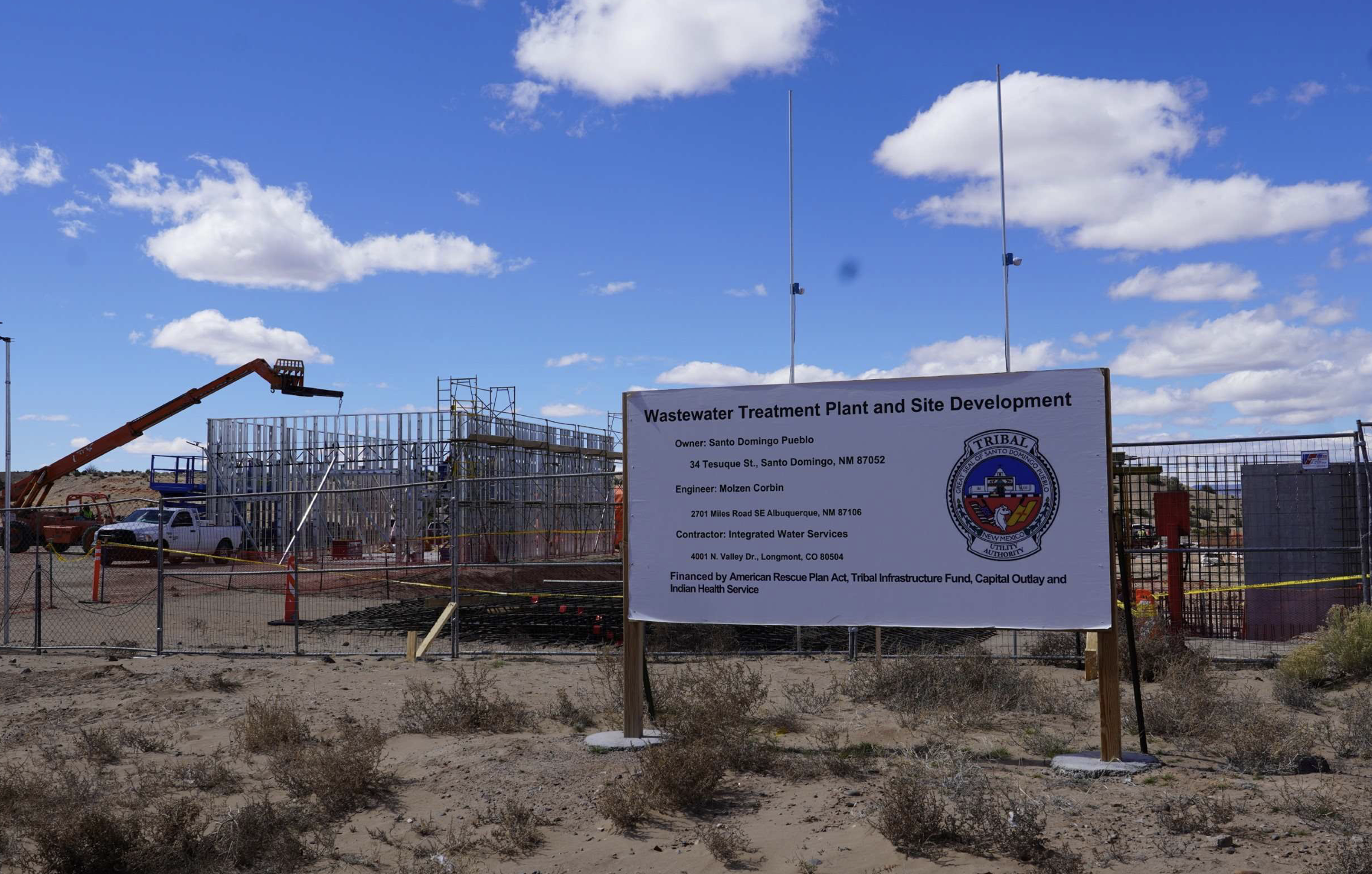
Since returning to New Mexico in 2017, Archuleta has focused on supporting tribal utilities. He moved from Sandia Pueblo to Santo Domingo Pueblo, where he now helps oversee water and wastewater infrastructure while mentoring the next generation of operators. Located along the Rio Grande between Albuquerque and Santa Fe, Santo Domingo Pueblo is one of New Mexico's oldest continuously inhabited communities. Deeply rooted in traditional cultural values, the Pueblo has chosen a different path from many neighboring communities, emphasizing cultural preservation over gaming and casinos. Archuleta arrived at Santo Domingo when major investments were underway, including upgrades to aging water and wastewater systems, new monitoring technologies, and workforce development efforts aimed at strengthening local capacity.

What motivates Archuleta most is helping communities build the knowledge and expertise needed to sustain their own systems. At Santo Domingo, where many infrastructure improvements are occurring simultaneously, he sees his role not only as maintaining systems but also as sharing knowledge and supporting colleagues as they earn certifications and take on greater responsibilities. For Archuleta, water work is ultimately about stewardship—of communities, natural resources, and the people who will inherit these systems in the future.

Interview
17:43 – 26:40 (25:50)
AO: It feels good for me to know I'm part of that, that we're building a wastewater treatment facility, upgrading all the infrastructure, and helping the guys that are here. With my knowledge to help them excel in their field right now, to help them, encourage them to get their certification. Most of the guys didn't have no certification coming in here.
EE: How many people work here?
AO: I can't think of one that has certification, only one certified. That's the reason they hired me. Oh no, our water transmission, our water operator, distribution operator has a level 3 in distribution. He's the only other guy that was certified beside me. Then we got our director from Cochiti — he came from Los Alamos, same place I used to work; I didn't know him though, but he knows a lot of people I knew. He has a certification also. And then just recently, one of our refuge truck drivers, CDL drivers, got his treatment too, Southwest Environmental Finance. He got his distribution 1 and his treatment 2 just a couple weeks ago. So we're really happy with them. We had other guys test, of course, they didn't pass, but we're telling them not to give up. Keep helping with the best way we can, you know? So bring in trainers or, you know...
EE: How many people are on the team?
OA: We have a total of 12 now. We have an engineer they hired last year — I don't think they've ever had a water and wastewater engineer. Then we hired an OIT just recently... There's a problem with finding operators. A lot of operators have already retired two times, they're on their 3rd career with being a water and wastewater operator, because it's a shortage, right? And what I learned in California is that they help recruit people, they started operator-in-training. I got that idea when I came back, because I was seeing the same situation in New Mexico. At Sandia, I was able to convince them to start a program for operator-in-training, and they were the first in the state of New Mexico to advertise.
EE: Does that mean on-the-job training?
OA: Yes, on-the-job training. They were the first In New Mexico to post an OIT position for water and wastewater — I bought that idea from California. That was back in 2021, I think. And with that program — we had a custodian that went through that program as an OIT, got his certification within 18 months, got double level 1s, we hired him and kept him on. Another guy was with farm services and he joined us in OIT, got his double level 1s. And then we hired some young people from outside of the tribe. They came in from a different pueblo and we hired them as OITS and they went on to get the certification also. So then I came over here and I brought that over here. We were having problems. I said, let'sdo an OIT and then they came up with their own job description for it. I know now the State of New Mexico, got that OIT in their language. I think they saw it off of us and then they made something with the state as far as OIT level 1, 2, 3, and 4.
EE: Is it a good job?
OA: It's a lot of meetings. My whole schedule is nothing but meetings. Once in a while, when I get free time, I go out in the field and try to check up on the guys, help them if I can. I'm the only wastewater operator. Well, actually, the director's got a level 2, but he's busy doing all that other stuff. So I go and take care of the lagoons and monitor the lift stations, stuff like that. I'll go out and build and help, wherever I can. Time permitting, if I don't have a meeting or something.
EE: It sounds like whenever you decide to retire, you might have people who are in place to take over…?
AO: Well, that was my whole idea! My goal coming here was to get as many people as I could certified before I left, so that when I retire, they'll be taking over that plant. There'll be operators. We're on the good path of getting these guys, keep working with them to get trained, and to hire more certified operators. Right now we're working with New Mexico Rural Water Apprenticeship Program. So we've recommended two of our W9 workers — W9 workers are temporary workers that we use for feast days or if we need them to do stuff around here, they're not full time. So we've had residents that we've helped out that way — that helped us out and we've recommended them to sign up for this program. We're currently trying to get them hired on as OITs through the apprenticeship program. Once they get their certification, then we'll hire them full-time.
EE: So if somebody's kind of on the fence or thinking about this as a career path, what would you say to convince them?
OA: I would say that the certification that you obtain is yours. It's a professional certification that you can reciprocate throughout the whole United States. So, if you have a level 4 in New Mexico, California will give you a level 4 straight across. Some states will drop you one or two levels; they'll still reciprocate it. The same way they treat waste water and water here in New Mexico, they do the same thing in Germany, in Japan. Language is different. Technologies are the same. You know, MBRs, SBRs, activated sludge, nitrogen rule — it’s all the same. The process is universal. There's a language barrier, but if they sent me to Kuwait to go look at one of their plants and I didn't understand, I could operate it because I would know what to do. If I had the equipment, I would know what to look for and know how to take care of everything. That never changes, no matter where you are. This career, you can work anywhere. You can do anything.
27:55– 31:52
OA: I would say my time at Cambria Community Service District, they totally let their wastewater treatment plant fail. I mean, the morale was bad. We only had like 2 workers there — one certified operator and the other guy was trying to get a certification. When I got hired, another guy was leaving — one of the certified operators. I went through my interview and I looked at the plant, did a tour and they asked me if I was going to take the job. I said, “yeah, I have a lot of work to do,” and I told them what I was going to do right away, what I was going to try to fix. So they were pretty optimistic about it. I got onto the job and….
EE: What was wrong? What did you see?
OA: It was an old package plant, they converted it into an aerobic digester, except they turned off all of the aerators and made them inoperable. So the sludge was just building up in there — it was 7-8 feet of sludge! There was trees growing out of it! There was a big tree coming out of it. Yes, and they had this trash can barrel that was a distal ring — that's how they would drain the clear water. They had all this sludge in there and they had one blower going. They had 3 blowers — one was catastrophic, you had to rebuild it. The other one had bad controls; so I got that one fixed. I put a VFD on it and I was able to lower it from 200 amps down to 120 apps; I was able to lower it considerably. They were off gassing because it was running at 100%. And they had no place to put the air, so they just let it off into the atmosphere because the irrigation basin in DO was above 4. You want it to be like 2.0 for an irrigation basin. By doing that, I was able to fix one blower. The blower that had been running for years and years — that's the only blower they had, it's amazing it didn'tgive out or else they would have had nothing. We took that offline and we put the one with the VFD, so it was regulating the dissolved oxygen levels as the flow came in. If it needed more DO, it had a set point and it would raise it up because they had SCADA there. So, I fixed that. I hired a contractor to dig out all the sludge, took out that tree. We drained one side of the tank and got all the diffusers working again and turned it into an irrigated aerobic digester. And then they had a submersible pump to pump liquids over into the decanting side of the digester. I told the guys, “I'm going to make you an airlift pump.” So I got PVC piping with the Y because we had a lot of air. I was able to run an air hose in there. I dropped it in there. All you do is turn on this air valve in the water. The air lifts water into this other side. We didn’t have to drop in the electrical because we had the air right there. I showed them how to do that. So that was kind of a good thing.
32:17-36:04
OA: One of the issues that we're having is that their point of discharge was next to a well aquifer. That well was getting high nitrates because it was an extended aeration facility. The nitrates were like 30 milligrams per liter. They were saying the limit for the drinking water was less than 10, I think. So what they were going to do was retrofit the existing, extended aeration basin, pour some concrete walls, add some mixers and recirculation pumps, to turn it into a nitrogen reactor extended aeration basin. The engineering firm estimated at that time, it was between 2 and 3 million dollars to do that construction.
The general manager was trying to tell me to turn off the blowers at night and I said, I'll fix it. That aeration basin had 3 stages of diffusers. I created my own nitrogen reactor by turning off the diffusers in the first part of the basin where the flow came in. The second stage where the diffusers are, I toggled back the valve to only have one milligram per liter. In the very back, I had two milligrams per liter or better — so that created my anoxic zone, and then this was my oxic. That's how nitrogen removal works — you have nitrobacter and nitrosomonas bacteria that convert ammonia into nitrite. And then the heterotrophic bacteria in the anoxic, they strip the O2 molecule from the nitrogen molecule; it releases it as an extra gas. That's called nitrification. So I created that environment in the aeration basin and not the terrifier. When you denitrify in the terrifier, that's where you have that issue. So I dropped a recirculation pump on the oxic side for my nitrifiers and then recirculated it back to the anoxic. That's how the nitrifiers were able to take care of the nitrogen — in reaching extra gas in the anoxic side. That cost me about $15,000 for the pump and electrical work. The rest of it was just addressing valves. I got the nitrate levels almost down to single digits. Almost zero, not quite almost. The California Environmental Department didn’t believe me — they thought I was rigging the test results because we were at 30. So he came down and grabbed the sample — various points influent, effluent, monitored our levels. We had a lab there and I grabbed samples behind them. I grabbed 2 sets of samples — a sample for us to run in-house and a sample to give to an independent laboratory. So at the end we got all 3 results back, they were all pretty close to each other. So he said, “yep, you know what you're doing!”
36:16-41:01
OA: So I moved to the Central Valley and worked at Foster Farms as a water systems operator. It was the water system for processing the chickens. They had a BNR plant — that plant is industrial wastewater treatment. They have 60 foot tanks in there, martin flow reactors, so it's a little bit different than municipal waste — higher mixed liquor and return-activated slush concentrations. They have this one basin that's 24 hours, just blowing air. What they had were positive displacement blowers and it had a bad design flaw. If a belt broke, it would swing around and it would knock off the oil hose from the reservoir that feeds into the mechanical part of the blower where all the gears are at and stuff. It would drain all the oil out of the blower motor and it would burn up. This happened when I was there and I asked the operator, how come this is happening? It cost you $20,000 every time to replace that and they went through like 7 of them. I said,we gotta figure something out. And I was looking at the design flaw and then I had one of our mechanics drill a hole through the enclosure of the blower (they come in enclosures for sound.) They rerouted the oil line in between the enclosure and the outside so that if it broke, it would knock it off. That's how we fixed that issue.
Then I was learning about different technologies. I'm always for technology and doing things better, more efficiently. I ran into one of the other operators who was telling me about centrifugal blowers that was actually like a jet engine. It's a centrifugal blower but it has an airfoil bearing on it, so it just spins in the air like a jet engine does. It produced the same amount of air that was required for that one part of the process. We're using a PD blower for a fraction of the electricity cost. The PD blowers were 200 horsepower motors that were belt driven that drove the positive displacement blower into the basin. Just having a belt on that drive — that's 20% efficiency lost. Well, that's all they had. So by going with this turbo blower — it was a 50 horsepower, direct line motor, meaning it was straight up and down, connected to the blower, through the motor and had an airfoil bearing. 50 horsepower — it saved so much electricity that within 7 years, it paid for itself. Electricity wise, it paid for that blower. It also saved electricity. So that was the other thing that I was realhappy that I was able to achieve.
I initially told my boss, the engineer, who hired me and a couple of the engineers about this process, and you're saying, oh, it'll blow up 30,000 RPM. It's gonna blow up on you! And then six months later, he buys one, he takes credit for it. But I said as long as we got it done, that's all I cared about.
41:47-45:34
OA: There's always different issues… so when asked if you can solve an issue or come up with an idea, we'll all get together as a team and fix it. It's always a team effort here. It ain't me doing everything, it’s everybody. We all work together for a common goal. That's the one thing I see here is that when something happens — there's a line break, something happens — the team comes together. Not only the team but the other departments. When I first started working here, 6 months into it, it was January. We had a lagoon breach. It was a major, big issue and it took a lot of resources from the Pueblo and different departments, even different communities came in — Rio Grande Conservancy District, Bureau of Indian Affairs, IHS, other Pueblos — they all came and helped us fix it.
EE: How did the breach happen?
OA: It overflowed. One of the operators left the valve open, forgot to close it, then it washed out the bank. We had to build a temporary percolation pond to move the flow over to repair the dike part of it. We got it done — we all came together as a team to get it done; the whole Pueblo did.
EE: Did you mention to me that you're putting in a more robust treatment plant?
OA: Yes. These lagoons have outlived their design. IHS estimated that we would need 30 acre feet more of lagoons to handle the capacity flow that we're getting. We only have maybe 10 acres right now. So we need 30 on top of the 10 acres that we have. Luckily for us, we got our irrigation pumps fixed — we’re able to send the flow right now through the winter, up to our irrigation fields. We have 10 acres up there, 3 miles away, up on the mesa — that helps alleviate that flow. Last year New Mexico Rural Water was helping us with some pumps and stuff— Jake Finch, he's one of the circuit riders from New Mexico Rural Water — and he had a great idea that he learned from another lagoon system where they used a fountain to help with evaporation. So I convinced my interim director at the time and tribal council and everybody to buy 8 solar fountains — solar evaporator fountains — and we installed them all last year. From July to November, we evaporated 5 feet. We didn't send nothing up to the irrigation fields. Of course, the winter time's different; there's not that much evaporation. So, we have that ability to send flow up there, not overflow. But we're trying to mitigate and keep the levels low. That was with the help of New Mexico Rural Water — they've been indispensable — whenever we needed support. Jake had a good recommendation and we went with it and it worked out.
47:19-1:03:36
Santo Domingo Pueblo has their big feast day and the utility department volunteers and helps out where they can. I think being traditional, they regard the water as sacred. The land is sacred. It's very important that we treat it with respect. We do whatever we can to make sure that it's safer for not only people here now, but future generations. So that's part of their belief and their culture and how they are. A lot of tribes are like that.
EE: That's very cool. Well, that might be a great place to end unless you, there's more you want to say.
OA: Uh, yes, actually. One other thing. What I notice by working with Native American communities — you go to workshops and you meet a lot of other people from different pueblos, from Navajo Nation, Taos Pueblo, Jemez, wherever — they all come together for these trainings, sometimes in Albuquerque, sometimes in Santa Fe, sometimes at their pueblos. Matt puts these on, ITCA, New Mexico Rural Water, and New Mexico Water and Wastewater Association — they all put on these workshops and you meet people. I've noticed with the Native American Training, there's a lot of tribal operators that are struggling, like they are here, trying to get the certification or being motivated to get it because they were never required to get it in the past. We’re trying to change that way of thinking. There's a lot of disadvantaged tribes out there and operators that don't get paid a whole lot of money. They can't afford tools. And sometimes it's hard to test for wastewater certification. So, Southwest Environmental Finance has a great National Tribal Water Certification — that's EPA region 6. They put on workshops and they do free testing for the Native American operators. IHS gets the money from the EPA for the Clean Water Act and for wastewater training certification. They give that fund to ITCA. I noticed that they give it to them because they're a Native American-owned business.
EE: ITCA stands for…?
OA: Intertribal Council of Arizona. So they put on workshops and a lot of training and certification exams for region 6 on the water and wastewater side. They have their own EPA recognized certification. The problem is that they do come to New Mexico and they'll put on something for water or wastewater or distribution or something and then they'll let you test for whatever they're teaching — they won't let you test for anything outside of it, more lower level classes — it's free, if they do that. If you want to take computer-based testing, you have to fill out an application with them. They tell you where the computer-based testing contractor’s at in your area. You got to pay $61 to test. If you don't pass, next time you test, it’s $61. So these guys don't get paid a whole bunch of money. Let's see for Santo Domingo, we pay for our guys to test. We pay for everything, they’re training.
EE: Wonderful!
AO: Sandia, they did the same thing. But there's other tribes — they're not gaming communities or maybe they don't get the support like we do. The operators don’t get paid a whole bunch of money, so they can't afford to pay $61. The alternative is the State of New Mexico. They recognize state certification, pueblos do — even though they don't have jurisdiction because they’re a sovereign nation. They still recognize their certification in the training.
EE: And they're still regulated by federal….?
AO: Yeah, they’re regulated by the EPA. So they have that opportunity to test for water and wastewater with the state. And in the past, they used to have these workshops and after the workshop on Friday, everybody would go and do a test directly. It was fresh in your memory and you would go take a test. Now it's computer-based testing with Workforce Solutions. So you got to find that slot, you got to get approved to test. I don't like that. I liked it when you got done on Thursday, Friday you tested. 4 hours.
EE: Yeah, make it easy for people.
AO: The first excuse they said was COVID. Well, you're having workshops now, why can't you have a test on site right there? Hey, get some grant funding, get some laptops. Have a set of laptops for water tests. Why don't you do that? I never got to tell anybody from the state about that. I haven't had to test anymore; I got my double level 4s 20 years ago, 25 years ago, so I'm just trying to help these guys. So these guys have that obstacle — at least with the state, they pay $30. They're able to test twice a year, if they don't pass the first time. So that's kind of good and they're getting better as far as getting these guys to get into workforce solutions. Before it was hard to schedule; there's a lot of competition because Albuquerque kind of covers that whole area, so we're competing against other operators to try to get a slot in there. It's still a challenge, but they're able to get in there and test. I have a couple guys that have tested for the wastewater that way. Of course, you have to wait a duration before you can go test again. So that was a challenge I saw for for Native communities and I asked Matt one time, I said, “how come you guys don't do wastewater certification like you do for water and the same kind of certification?” And he goes, “we're funding through Safe Drinking Water Act, EPA.” So wastewater falls on the Clean Water Act; it's a different division — that's why they can't do that. They can do wastewater training but they can't do any certification because they don't have a program.
So I just thought it wasn't right that all the money went to ITCA and they're the only ones that are doing it. It's still helping, but I thought having that national certification would be beneficial to native communities, native operators. So I reached out to congressional delegations for New Mexico and the senate — Senator Ben Ray Lujan’s staff reached out to me. I included Matting on it because I'm trying to use what he's doing to try to get this program funded so that we have a Region 6 EPA waste water certification.
EE: Would you want to run a program like that? Or you just want to see it happen?
OA: Probably not. I'm already 35 years in it, but I'd like to help get something established. I talked to the staff and they said, oh, yeah, yeah, well, you know. Ben Ray helped out with Santo Domingo to get money to build the plant. I introduced Matt and Matt talked to him, told him the issues that they're having with wastewater and not getting these guys certified. Why can't they get a certification program that doesn't charge their operators, like Southwest Environmental FInance — why can't they have one for wastewater? I got nothing back from EPA, so I kind of let it die down, and then this tribal working group came up with Southwest Environmental Finance and all the pueblos and reservations are getting together and talking about these issues — what problems am I having here? How did I fix it? Or how can we get more operators involved, get them certified, recruitment or whatnot? So I brought this back up. Every time I would see Matt, I said, what do you think? What can we do about getting that program going? So I got this agenda that I want to take to a meeting that we're probably going to host one at the trading post up here. I want to bring this up and try to get everybody together.
EE: Agenda: establishing a national tribal wastewater operator certification program. Wow, you've got it all laid out!
OA: Yes.
EE: Yeah, background and need for a national standard. Wow, good work.
OA: So the idea is to get all the pueblos together and ask IHS and maybe involve EPA — I don't know what department of the EPA is giving money to ITCA and whoever else — and try to get IHS involvement. Say, since you're taking care of the clean water act, why don't you help us get this program going? I don't care who runs yet. It could be a board of different pueblos and different trainers, groups like Southwest Environmental Finance or ITCA, and have a standardized certification like they do for the water operators.
EE: How many pueblos have wastewater systems?
OA: Every one. Every reservation or pueblo has water and wastewater systems.
EE: And that's how many?
OA: In New Mexico, there's over 20 pueblos. Right? In the whole country, that’s a lot. Just Region 6 involves California, Alaska, Hawaii, New Mexico, Oklahoma. Texas and maybe Colorado, Arizona, Utah. That's just region 6. So, if we can get somebody in all those regions, and have a governing board, we’d get those funds to run that program. — so we don'thave to charge our operators $61 to test, when it's being provided free for the Safe Drinking Water Act under the National Tribal Water Operator Certification Program. I'm just asking to mirror that program to wastewater.
EE: I think you're going to be successful.
OA: I wrote it up and gave it to Matt.
EE: You got your key agencies, implementation framework. This is really thought out.
OA: Well, what I did is I typed out everything that I wanted to achieve in a paragraph, and I copied it, then went to copilot, AI, and I asked it to do an agenda for me, and he got all that information and put it in the structure.
EE: Looks good.
OA: So I cheated a little bit. That's okay, because I erased some things and added to it and made it mine all the way. But all that information was laid out.
EE: Other than getting some funding…?
OA: That's where the work begins, and the cooperation of all the entities — not just tribal but all the training providers, like Southwest Environmental Finance, New Mexico Rural Water, ITCA — coming up with one standard for everybody. I'mnot against state certification. That's fine; the state can do that for their municipalities, whatnot. But what I'm advocating for is for Native American tribes and having that wastewater certification program standardized.
EE: Do you think raising awareness is part of that challenge to getting the support that they need?
OA: Yeah, I can't speak for other tribes, but like for Sandia and Santo Domingo, there's support there; the management is supporting them. We're doing everything that we can to encourage, to keep training, to bring the training to them, or send them to training. I'm not too sure how other tribes operate in the awareness. I would like to see some type of outreach program to some high school seniors who are not going to go to college, to consider this as a trade. Not only do we do water and wastewater, there's also engineering for water and wastewater. There's laboratory technicians who do compliance, testing or process control. So there's laboratory certification that they can do too. They don't have to be out in the field running the plant. They can be a lab person.
EE: There's a whole industry.
1:03:39-1:05:43
OA: There's a gentleman that's been in the business a long time, and he's a trainer now. He gets funding through ITCA and IHS, to put on training for tribes. His name’s Michael Lavideris — I don't know if you've heard of him. He's a really good instructor and I was real impressed. I went to one of his classes when I was at Sandia, because I needed to keep up my certification. And the way he would teach classes, because after a while the students get kind of bored and start falling asleep. He would stop and see that you, he would do a bingo session. He would go and draw names and somebody got a bingo, they would get a prize. He would have these brown paper bags on a table with different prizes in them. So some of the guys pick a bag and they open it up, there'd be a wrench.
EE: Oh, nice.
OA: Because some of these places like Navajo Nation are way out there. They can't even afford to have a wrench so having a wrench is a viable tool for them where they can repair something. This is what he would do with his training budget — he would buy this for these guys
EE: — and also make it fun.
OA: Some of them would pick a prize and they would open it up — some of the stuff was from the dollar store. It was like a pregnancy test. It would be a guy, so they were going to start laughing. Also headache medication or something. A band-aid or, you know, but sometimes the guys would get a nice tool set. Something little like that would prevent a disaster because they didn't have that resource, maybe, they didn't have that luxury of having their tools.