Chris Harris
Chris Harris
Town of Erie, Colorado
“I like a nice, quiet day at the Water Treatment Plant. I like thinking through and trying to optimize the water treatment process to the best of my ability.”

Chris Harris has spent 26 years working in water treatment across Colorado, although he came to the profession by a circuitous route. Raised near the small mountain towns of Black Hawk and Central City, Harris graduated from high school in 1990 and planned to attend college but, driven by necessity, he left the area to find work and spent a decade in traffic control. His growing family heralded a return to the Black Hawk area, where he took a municipal job plowing snow and maintaining parks until the town’s lone water operator told him he needed help. Harris began studying water treatment manuals on his own and earned his first operator certification – a decision that launched his career.
Much of Harris’s career has unfolded along Colorado’s Front Range, where growing communities depend upon an intricate network of reservoirs, canals, pipelines, water rights, and trans-basin diversions. In Black Hawk, he watched the legalization of gambling transform the tiny mountain town and dramatically increase its water demands, and he later helped start up its Hidden Valley Water Treatment Plant. At Soldier Canyon, near Fort Collins, Harris advanced from senior operator to manager of a 50-million-gallon-per-day plant fed by the Colorado-Big Thompson system; for eight years, he and his family even lived in the operator’s house on the plant grounds. He later worked for the City of Greeley before moving to Erie, another community that has grown dramatically in recent decades.
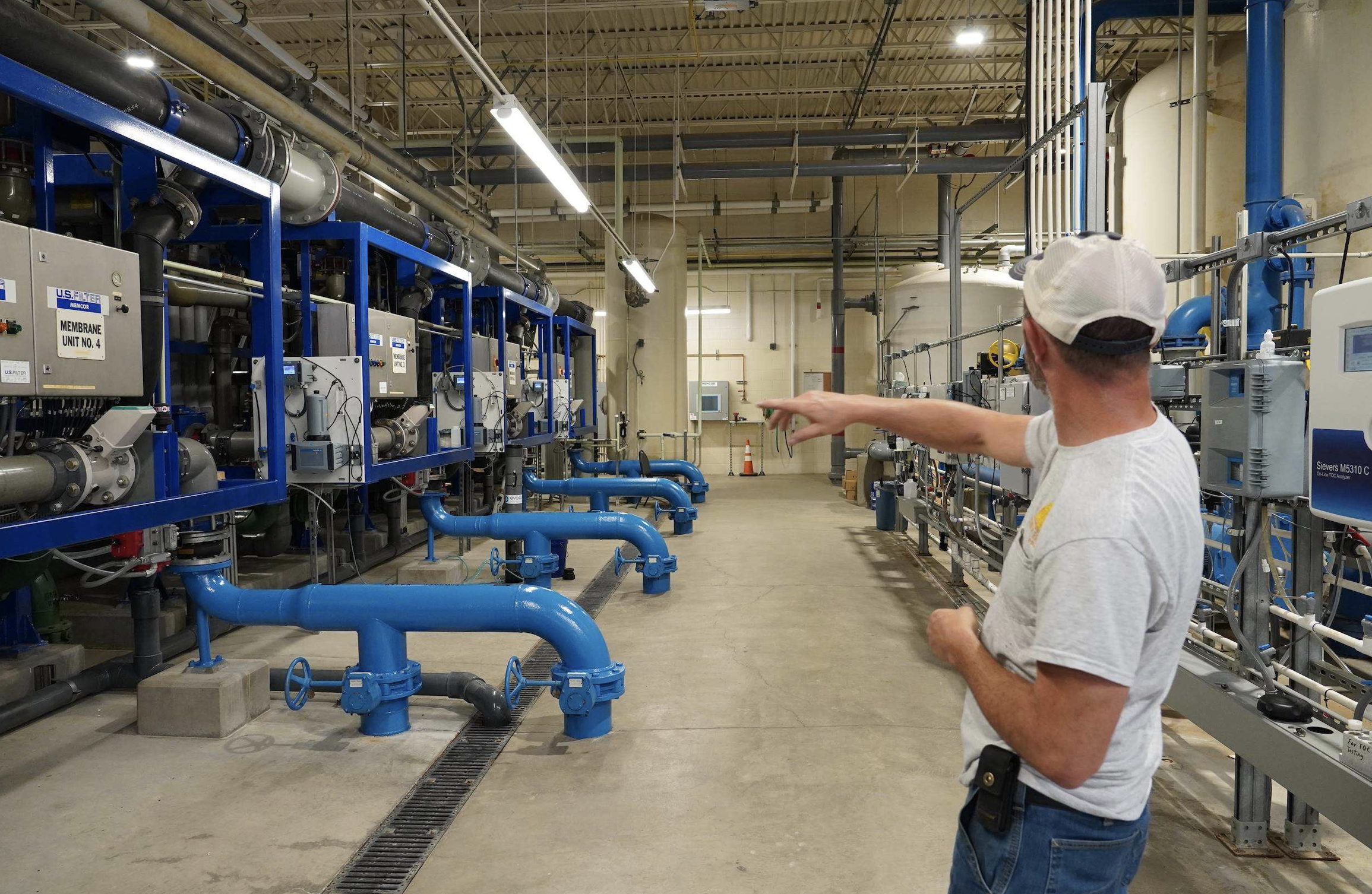
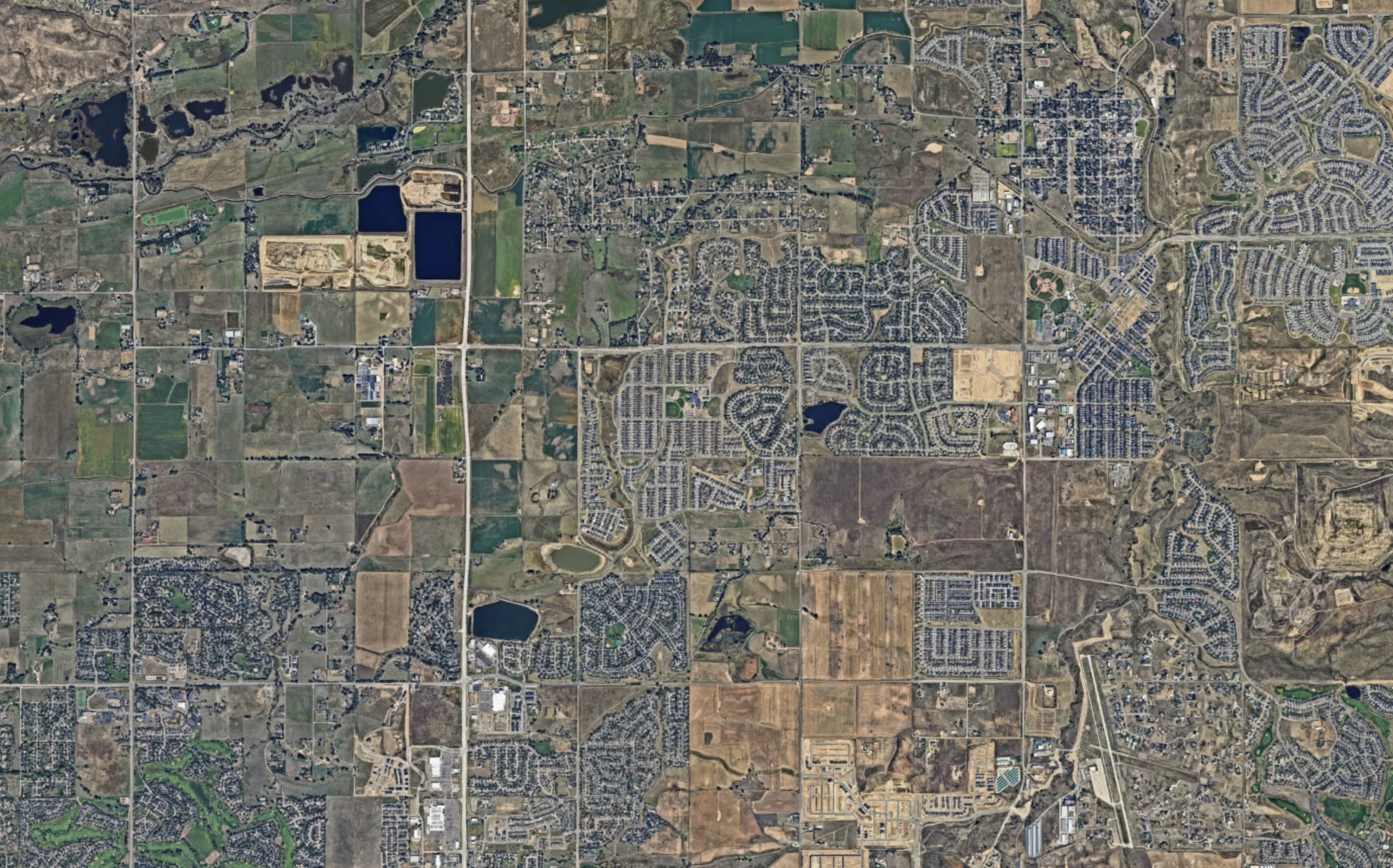
Today, Harris oversees Erie’s 16.75-million-gallon-per-day treatment plant, which serves a mostly affluent town of roughly 44,000 people. Much of its water originates as snow and precipitation on Colorado’s Western Slope and is transported east through the Colorado-Big Thompson Project before passing through Front Range reservoirs on its way to Erie, but drought and population growth challenge the town’s future water sources. As Plant Superintendent, Harris oversees a team of operators and prepares for inevitable changes in technology, in workforce, and in the amount ofwater available for Colorado towns. Though not without its challenges, he appreciates a career steeped in life-long learning, a critical level of public responsibility, and a fascination with how the world works.
Interview
Interviewed by: Erin Elder, Interview date: June 16, 2026
Being an Operator-In-Responsible-Charge
CH: I was the Operator-In-Responsible-Charge for Black Hawk’s one plant in town, called the Dory Hill Water Treatment Plant, and then their distribution system. I was never the Operator-In-Responsible-Charge of their new plant, Hidden Valley Plant — I say new plant, it's thirty years old now, so it's not very new. And then, I worked my way up to Operator-In-Responsible-Charge at Soldier Canyon. I wasn't the Operator-In-Responsible-Charge anywhere in Greeley, but now I'm the Operator-In-Responsible-Charge just for the treatment process here in Erie. And being the Operator-In-Responsible-Charge has always been an interesting challenge. There's actually a group of Operators-In-Responsible-Charge that meet on a quarterly basis here on the Front Range to talk about how we work through things and how we accomplish tasks. One of the interesting things about water treatment is that each system has to have an owner. And generally, the owner is some type of administrator. It could be the mayor of a town; it could be the owner of a homeowner's association; it could be an elected official, it could be whoever you want to be. You have an owner and then you have an Operator-In-Responsible-Charge that has to be certified to the level of the processes. The State will assign certification levels. They say, “if you're treating a lot of water, if it's very complex, you need a higher level of certification where if you're doing very little, you can have a lower certification.” There's sometimes when there's an alignment between the owner and the Operator-In-Responsible-Charge, but more often than not, the Operator-In-Responsible-Charge has all the responsibility but not the authority to do things that are necessary to effectively do what you need to do. It's constant communication and sometimes struggle and more communication and back and forth and back and forth. So I would say for operators, that's one of the big things. I've seen other municipalities and water systems where there's more than one Operator-In-Responsible-Charge to kind of carry the load. I can understand that approach, the Operator-In-Responsible-Charge is required for every process change that's made so it can be quite intimidating — you're allowed to write standard operating procedures and delegate. But ultimately, you're the ones that's responsible, so you can, you can do a lot but it's just, it's a lot. Because, a plant, generally, will run 24/7 or there are some that run occasionally and shut down, but if they shut down, then what happens, you know? Is there stored water? What does that do? A lot of these water treatment plants, they like to run all the time. When you shut them down and restart them, you can have all kinds of issues with pumps or motors or analyzers or computers or PLCs or whatever. So, starting and stopping can be a problem, running all the time — just kind of in the back of your mind all the time, you know, what's going on?
Changes to water in Colorado
CH: When I started working — my first job was in Black Hawk and they had a couple wells just west of their treatment plant, and then they were pulling water out of North Clear Creek. The way water works in Colorado, it's kind of a first come first serve thing and that started with Greeley way back in the day. They figured out they were going to need a lot of water and so they figured out they were going to move water a long distance, so they went to court to make sure that they had that right to do it. And so ever since then, whoever gets the right to water first — as long as they can say they're using, putting it to beneficial use — they get their water before the next person, so the more junior your water rights are, the less right you actually have the water if there's a drought or anything. Black Hawk had been taking water out of North Clear Creek for quite a while, but they didn't file for any water rights until the ‘70s — that was decades before I worked there, but they were way in line behind Coors Brewing Company, Arvada, Westminster, all these other places that are taking water. When gambling was passed and the town needed a bunch more water, what they had to do is something called an augmentation plan. What they had to do was, they would lease water rights from the Coors Brewing Company, and they'd use that to pay back the water that they were taking upstream and then they had to make sure that nobody was harmed in between those two points. That was my first experience with water and water rights and how that all works.
Then my second job at Soldier Canyon, that water comes from the Northern Colorado Water Conservancy District. Their first project, Northern Water, was the Colorado Big Thompson Project. Around the time of the depression — people think it's hard to get money together now, it was kind of hard to get money back together then but government was different — the Department of Interior drove forward this process, where they were going to capture water on the Western Slope and deliver it to the Eastern Slope for farming. They wanted the Front Range of Colorado to be the breadbasket for America. They built this project and they sold shares to farmers at a dollar a share which was a lot of money back then, and they weren't sure if it was viable or if they were going to take, if it was going to actually work or whatever, but they actually built it. There's some impressive… they built some reservoirs. They built a tunnel underneath Rocky Mountain National Park. Try to do that nowadays, it would be impossible. They generate electricity in another number of places. There's a bunch of reservoirs on the Front Range, so that's a very well-developed system and it delivers water to Fort Collins, Fort Morgan, Greeley, Boulder, Erie, a bunch of places — a lot of people are dependent on that.
What they've done over the years is they've acquired those shares from the farmers, changed its use to municipal, and so that's where a lot of water treatment plants on the Front Range are getting their water is from that system. That was originally intended to supplement farming. So, it's supposed to rain, sometimes it doesn't, but it's supposed to rain so the Colorado Big Thompson Project was to supplement that with additional water as necessary, not necessarily to be the only source. But here, now it's a different use. It's the only source, so it's a different thing. There's different strategies that people are using — both Greeley and District Fort Collins Soil and Water District — they're going to start pumping water from the Terry Bison Ranch, so it's a well, an aquifer. That's how they're going to take their growth forward, is by taking water out of an aquifer. There's different aquifers that are along the Front Range and different water providers have used them; some of them are losing level and they're trying to find other ways to do things. There's a really big project that Northern Water is trying to do now. It's called the Northern Integrated Supply Project or NISP. And what it is, it's a new reservoir, they want to take water off of the Poudre River, divert it, put it in this big reservoir called Glade Reservoir, and then deliver it to a bunch of municipalities along the Front Range. Erie is the biggest participant in that currently.
EE: That's already underway?
CH: So, it took a long time to get it permitted; it is scheduled to begin construction next year. The municipalities that have invested in it so far have spent a lot of money trying to get it off the ground and now they're going to have to spend more money to actually implement it. There's some controversy here in Erie. There was a recent board vote — should we participate again this year? — and it was passed 3-2. That's not unanimous, and boards are elected so our future of water might be this. I'm hoping it is, but we'll see. There aren't a lot of new sources of water, so there's a lot… the price for the existing sources of water keeps going up and up and up. Black Hawk, we took water off the river. Here, water's being diverted off the Colorado and Fraser Rivers and then moved to different reservoirs and ultimately comes here. You might have heard that there's some competition for water on the Colorado River and different people have different levels of interest in who's getting that water and what they're using it for.
Accommodating growing populations, paying the cost, planning for the future
CH: If push came to shove, you know, there are watering restrictions, there are things you can do, there's xeriscaping. There's different things you can do, but at some point, a lack of water limits growth. And there's a push-pull thing about whether growth is good or bad or indifferent or what the right level of growth is.
EE: Do you see that as part of your responsibility to weigh in on that or have a say? Or how do you square what you're doing with some of those dynamics?
CH: Throughout my career in water, I have tried to stay in my lane and do the best I can to explain — first to understand and then to explain, if necessary — what we have, what it takes to do something different and then try to wrap my mind around what it might cost, and it takes a lot of leg work. I don't do everything in-house; I've worked with engineers and lawyers and a number of different people throughout my career as far as master planning and stuff, but generally it's in somebody else's job description. In Black Hawk, there was a building and planning department; here in Erie there is a building and planning department. At Soldier Canyon, I managed the water treatment plan and reported directly to the board. But each one of those water districts — there’s three water districts that make up that board — they're responsible for what they do. One of those three districts, they weren't anti-growth, but they didn't want their current customers to pay for growth, so they grew very slowly. Another one of those three districts had the opposite approach. They wanted the growth, so they would proactively buy shares of the Colorado Big Thompson Project so that when developers come in, they could use cash in lieu and build faster. And the other one, they're like, “You want to build? Well, bring the water.” You're building houses, you're like, “I need to bring what? To where? What are you talking about?” where if you can just, “I need you to write a check for this amount,” it’s a little bit more straightforward.
Another challenge for the people, the providers that treat water, is that generally it's undervalued. You don't want to impact people in a negative way, you don't want to charge more for something than it's worth. But things have gotten more expensive and so when you build a water treatment plant, you do it for a certain amount… as those pieces that make up that plant, those processes start aging out and you need to start replacing them, the cost now and the lead time, it’s not what people are used to. And so, you have to raise water rates, you have to, if you have growth, you need to increase tap fees and water dedication fees so that you can cover either growth or just maintaining what you have. That impacts people in their pocketbook and, generally, what happens is the people that make those decisions are elected so they feel the pressure to keep the price low. But I've seen places managed in different ways and generally, if you can look at it from a mindset and communicate it in a way that you're trying to manage resources and provide long-term value, you end up with a much less expensive system and a more robust system than if you just try to save money. Because when you're just trying to save money, you're just putting problems off until they're going to be more and more and more expensive. And the places that have — the water providers that have slow incremental rate increases they're generally in a better position than places that wait and wait and wait until they are forced to have a huge increase. Because at some point, it costs what it costs. Whether you're elected or not, people think of treating water as drinking water or for their lawn, whatever it is. One of the most important functions is fire protection and providing fire protection to either residential or commercial areas. There's limits that are set by insurance companies, by planning boards, by state agencies that have to be — you need to protect the public health at all times, and part of that is fire protection.
EE: What does that look like here?
CH: Here we're building more storage…
EE: For fighting fires, should they arise?
CH: It's more for the treatment, but the fighting fires is a component. You're not required to have enough water to fight the biggest fire. I don't know if you heard about what happened…
EE: The Marshall fire?
CH: The Marshall fire was here, but in California there was a lot of finger-pointing because there wasn't enough water, and it's like, well, there never could be. I mean, you could pump it out of the ocean as fast as you wanted. Certain fires are — depending on the circumstances that led up to the fire and circumstances of the fire — sometimes they can be fought and sometimes they can't. The Marshall fires is a good example here, even the most robust firefighting techniques, even if they had in-home sprinklers, they still think they would have lost the majority of the homes.
EE: So creating storage throughout the community is part of that plan.
CH: Yeah, we have 5.5 million gallons of storage, and then we're looking at building a 3-million-gallon tank and a 4-million gallon tank, so those are currently in design.
Sourcing chemicals
CH: The cost of chemicals is one thing. At Black Hawk and then at Soldier Canyon and Greeley, I fed chlorine gas. Here if you look out the window, you can see a house. So chlorine gas would not be a good option here. One of the things that's required, if you feed chlorine gas, is to do studies on a regular basis to figure out if you were to lose some of that chlorine, how many people would you kill? What would be the footprint of that chlorine leak? And here we feed bleach, the chlorine gas is 100% chlorine. The bleach that we feed is 10-12% chlorine, we're paying to haul and for the water for that bleach and then the storage — you know, we have to have a storage tank to store that bleach and the bleach isn't stable. Bleach wants to be chlorine gas, so it comes out of storage. If you buy 12% bleach, and sit on it for three years, you might have 1% or 2% bleach by the time you go to use it, because it'll just off-gas. Yeah, you have to have storage for chemicals; that cost of chemicals are going up all the time. Where things come from — so the anthracite media that I was talking about before, that's coal. At one point, you're competing for coal for people that are burning it. Now you're seeing the opposite of that where there's less coal mining. So is there a future anthracite? Where does it come from? And then, here, to raise the pH of water, we use caustic soda. At different places, I've viewed soda ash, which is mined in Wyoming, so trying to get that — my chemical supplier arranged a tour for me of the mine. I got to go, I think it was 1700 feet down below ground and see where they're mining the soda ash and at that point, I got a great education. We would get these big trucks that would haul 40,000 pounds of soda ash to us so we felt like we're a big customer. “Where is my soda ash? I ordered this weeks ago. How come I don't get my soda ash?” Going to the mine, you could see the rail cars that were taking it to places across America and across the world. We, as our little bitty plant, were the smallest customer that they had and couldn't matter a hill of beans to the mine. Our supplier, their bread and butter was us. But understanding the grand scheme of things where things come from. And so different people use different processes — some places will use lime that has to be mined to some places. The diatomaceous earth that I used to use at Black Hawk to filter the water — that was mined outside of Houston. So there's different processes that people use…
Community entitlement
CH: Some people, they're looking for any reason to complain about things. Some people, they just want to know what's going on; other people, they will complain about the noise of our generator. Well, the plant was here first, we’re trying to make drinking water. We’re really sorry, but, if we say we're changing water sources, you'd think that people would be like, “Oh, okay, I taste something different, must be the change in the water source.” Other people will use that as, “Oh, so, the water's not safe now,” and you'll get all this information about this. There's things that people are concerned about justifiably — microplastics, PFAS, pharmaceuticals, things that are regulated, things that aren't regulated — and so there's a lot of things that we test for, there's things that we use certified tests for. But the beginning of this year was a good example, we had to implement some water restrictions because obviously there is a drought that's affecting a lot of America. There was a big pushback by some of the residents that did not appreciate that. At the beginning of our season, we don't have access to that water from Boulder Reservoir; we just have a limited amount of access from Carter Lake. We physically could not deliver more water if they took it; the restrictions were necessary. But they pay for what we do, and they don't want to be told.
Being I like a quiet day: good teamwork, communication and planning
CH: There's always challenges.
EE: Sounds like that's part of what you like about the job.
CH: Not at all.
EE: Oh, no?
CH: I like the opposite of it.
EE: Oh, when things are working smoothly.
CH: I like a nice, quiet day at the water treatment plant. I like to think through what's going on. As an operator, back before I got into being a supervisor or a manager or currently a superintendent, I really liked thinking through and trying to optimize the water treatment process to the best of my ability. And I could have an eight or ten or twelve hour shift, whatever was required. I could use that time to learn the processes, get the most out of it, and then where we did shift work, I could hand it off to somebody, and I liked getting the feedback that “hey, you could have done this better” or “hey, that was great.” We would find teams that, you knew what you were walking into, you know. If Brad was going to hand you off the plant, boy your first couple hours are going to be something. Where if Kent handed you off the planet, you knew, you could have a cup of coffee, things were going to be okay; he wasn't going to hand you a mess. When you're handing off to Brad, you don't know if he's going to show up on time. Your twelve-hour shift might be a thirteen, fourteen, fifteen-hour shift. You're handed off to Kent, you know he's going to show up twenty minutes early and you'regoing to talk for a while and you're going to have a lot of information that goes back and forth between you. So different operators do different things, but I like that personal control. When you move into management, you have to delegate; you can't personally do everything yourself. So how and when to delegate things —it's a struggle. And then, the state requirement, the town requirement, of being the Operator-In-Responsible-Charge, meaning that I'm responsible for every decision that's made that impacts water quality, it complicates delegation, for sure, because you need to delegate, it's required. But when you delegate and things aren't done the exact way you said, then there has to be consequences.And if you have a limited staff, it’s hard to enforce those consequences because there aren't…. If you piss somebody off and they leave, then you got to hire somebody else, which takes time and effort, and then… you need to learn how to navigate with people and communicate and try to get the most out of people. I think I do a good job at that. I think my crew appreciates me, but I recently have been kind of working myself into the ground, so I’m having some conversations with my supervisor and his director and we're trying to figure out if there's some things we can do to change, but…
EE: Have you had good bosses in the past to learn from, mentors in the field?
CH: Yeah, I honestly believe that I probably learned a lot more of what not to do. I try to learn from everybody that I can, there isn't anybody that I've ever come across that haven't learned something from. I have learned a lot of good things from a lot of good people. Some of them are supervisors, but a lot of them are people that work under me or next to me or… just books or movies or whatever. I mean, there's always life lessons and if you're not learning something from somebody, you're just not paying attention. It might not be anything that you want to model, it might be that you want to learn to model the opposite of that. But if you are paying attention, there are things to learn all the time.
I do… that's one part of this job that I do like. I have learned about membrane roofs. I learned about asphalt. I learned about different styles of pumps. I learned about hydroelectric generation, about water treatment, about all kinds of stuff, and as long as I stay in this field, it's never going to stop. And some of its minutia, you know, what program do you use for tracking finance? What program do you use for tracking timecards? What are the processes for purchasing things? And some of them are just… they only work where you're currently working. They don't necessarily translate to other places, whether it's treatment processes or how you do your timecard. But you need to learn those new things and learning new things is good and trying to teach and bring people, other people along, learning new things is fun and challenging. You know, the excitement — I hate exciting days because it's never a good thing. You're never excited, you'renever physically doing a bunch of stuff because things are going well, it's the opposite. I really enjoy working hard. I like taking down a basin and operating a fire hose and moving all the sludge out of it. I don't have a problem with that, but when you have to drain the basin super-fast, when you have to get the sludge out of there right away because there's an emergency, because you need to fix something, when you're pushing for parts, when you're waiting for those parts. I mean, there's… when you drove in, you drove past some fire hoses. We’re pumping water. Because our current pump is gone, so we're physically pumping it with other pumps and right before you got here, I went to Lowe's to go buy some extension cords because we need to replace some extension cords that got fried last night. And so there's all these little, small challenges that are just, here or there, but generally the more exciting things at a water plant usually comes from not pre-planning and not being prepared and not having what we should have because our role is so critical with between fire-flow and drinking water and the other things that we do is redundancy. It should be as easy as “this isn't working.” “Well, use this other thing while we work on this, and then we'll get that going,” and then you can go back to the other one, and so there should always be a good solid plan B, and so that's one of the things I have always, and as long as I'm in this field, will push for, is redundancy at multiple levels, whether it's staffing, or equipment, or whatever. Because our mission is critical, it's important that we can do that, and if you don't recognize that everything will fail at some point then you're not living in the real world. These plants — they have a lifespan. But nobody's planning for that lifespan and if you're not thinking that things need to be replaced, then you just have your head in the sand and you're not paying attention because it will need to be replaced and there's going to be a cost for it and the logistics of actually doing it, it might be very hard if you need to replace something that's in service where it is. Because it needs to be doing its job, how do you take it offline to replace it? Trying to come up with all these contingency plans —- it can be a fun experience. It can also be very challenging, depending on if you have the support and resources that you need.
Seeing beyond good and evil
CH: You don't really know everybody that's helping you out. I hope that things transition back to where there's more humanization and less dehumanization. And then I think the biggest life lesson I've learned with water is just; with water, with the chemicals that I put into water to make it safe, with the processes that I use, there's really no good or evil. Everything has the capacity to be used for both, almost everything on this planet is here to keep us alive and kill us at the same time in the right concentration. And so, is sunlight good? Yes. Is there a downside to it? Yes. Is chlorine good? Yes. Is there a downside to it? Of course there is. Everything, to just say this is bad, well, if something is just bad, why is it just bad? What made it just bad? What's going on with it? So, you know, PFAS isn't good for you. Well, it's keeping the water off my feet. That's why it's there, there's a reason. To try to just have more reasonable conversations with people is what I'm looking forward to in the future. I'm hoping that things will be less polarized and less hurtful. That's just me…
EE: Do you think water is an opportunity for that kind of balance to be restored?
CH: It's funny because here in Colorado — this statement's been around, I think, since Greeley first filed on water over a hundred years ago: “whiskey’s for drinking, water’s for fighting.” But I have seen big municipalities actually have to work together to work through water issues. It's just, can you get on the same page? Can, I think it's seven states, agree on how to allocate water on the Colorado River? Can people prioritize what's important and figure out what's important? Is your lawn any more or less important than a cotton field in Arizona? To you? You know, and then the Not In My Back Yard thing. You know, we got people complaining about noise and stuff and it's like, “Okay well, where would you like us to be? How would you like us to solve that problem?” Because when we pay for it, you're actually paying for it. I've heard some interesting financing conversations where we found this good way to finance this project. A third is going to come from the federal government, a third is going to come from the state and then a third will come from you. Okay, so it's all coming from me, is what you're saying. Everything costs something and I think the more people realize that, they might not walk into meetings as angry. Or even if they walk in angry, at least try to listen to the answer because… I don't see a lot of people that aren't doing what they think are the right thing. If you could try to meet them halfway, then maybe you can make some progress, but if you're right and they’re wrong, you're probably always going to feel that way and they're probably always going to feel that way and how do you get off high center?